





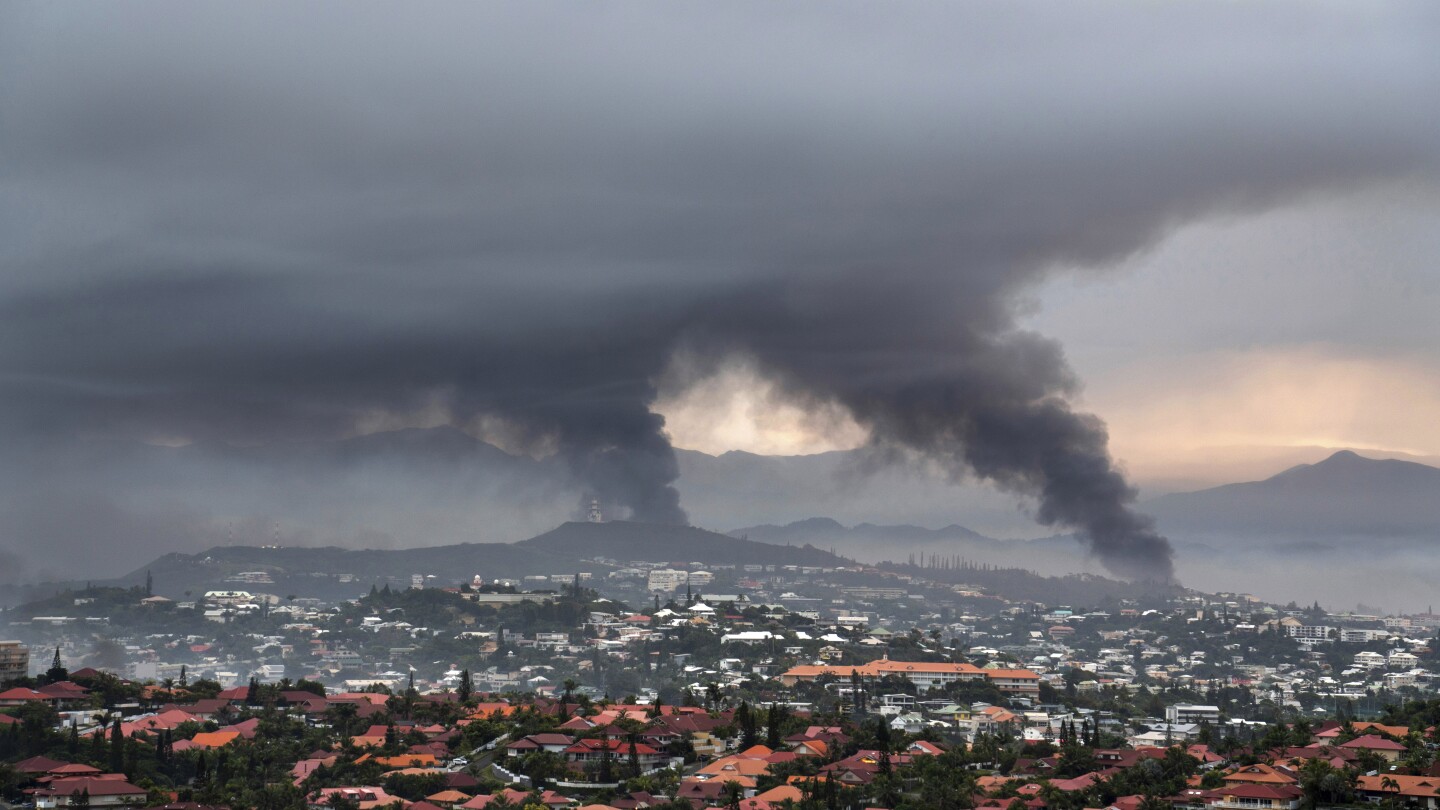
French President Emmanuel Macron has decided to lift the state of emergency in the French Pacific territory of New Caledonia, following unrest that resulted in seven deaths and widespread destruction. The decision aims to allow for political dialogue and meetings among various groups, including the pro-independence movement FLNKS and other local leaders. Despite lifting the state of emergency, a curfew will remain in place, banning travel between 6 p.m. and 6 a.m. except for essential workers and emergencies. Additionally, restrictions on public gatherings, transportation, weapon carrying, and alcohol sales will continue.
The main international airport in New Caledonia, La Tontouta, will remain closed to commercial traffic until June 2nd, as a result of violent protests against Macron’s government. The Magenta regional airport has been operational for military flights evacuating French citizens and tourists. Macron has been advocating for the removal of protesters’ barricades to pave the way for negotiations. The statement also mentioned the arrival of additional security personnel on the archipelago in response to the unrest. The state of emergency, initially imposed for 12 days, granted authorities greater powers to address the unrest, with more than 460 arrests made since the protests turned violent.
The leader of a pro-independence party in New Caledonia has urged supporters to remain mobilized and resist the Paris government’s efforts to impose electoral reforms that the Kanak people fear would marginalize them further. The Kanak and Socialist National Liberation Front called on Macron to withdraw the electoral reform bill to end the crisis. New Caledonia, which became French in 1853, has a complicated history with indigenous Kanak people and ongoing tensions between pro-independence factions and those aligned with Paris. French citizenship was granted to all Kanaks in 1957, but the quest for independence remains a significant issue in the region.
The decision to lift the state of emergency comes after Macron’s visit to New Caledonia and efforts to engage with leaders on both sides of the conflict. The unrest, which led to the deaths of at least seven individuals, highlighted the deep-rooted divisions within the territory. Despite the lifting of the emergency measures, security reinforcements will remain in place, with additional gendarmes deployed to address the situation. The move toward political dialogue and negotiations is seen as a crucial step in resolving the ongoing crisis and addressing the grievances of various groups in New Caledonia.
The High Commissioner of New Caledonia emphasized the need for continued security measures, including the curfew and restrictions on public activities, to maintain order and prevent further violence. The closure of the main international airport underscores the impact of the protests on the region’s infrastructure and economy. Macron’s push for dialogue and the removal of barricades reflects his administration’s commitment to finding a peaceful resolution to the conflict. The coming days will be critical in determining the path forward for New Caledonia and addressing the underlying issues that have fueled the unrest in the region. The lifting of the state of emergency signals a shift towards a more inclusive political process, but challenges remain in reconciling the divergent interests and aspirations of the various groups in the territory.
The call for withdrawal of the electoral reform bill by pro-independence leaders highlights the importance of addressing the concerns of the Kanak people and ensuring their representation and participation in the political process. As New Caledonia navigates this complex and volatile period, international attention and support will be crucial in facilitating a peaceful resolution and promoting stability in the region. The lifting of the state of emergency is a significant step towards de-escalating tensions and creating space for dialogue, but the road to lasting peace and reconciliation in New Caledonia will require sustained efforts and engagement from all stakeholders involved.