






A fourth Indian national living in Canada has been charged in the slaying of a Sikh separatist leader last June, which has been the center of a diplomatic spat with India. Amandeep Singh, a 22-year-old, was charged with first-degree murder and conspiracy to commit murder. He was already in custody for unrelated firearms charges in Ontario. Singh is an Indian national who splits his time between Brampton, Ontario, Surrey, British Columbia, and Abbotsford, British Columbia. Due to ongoing investigations and court processes, no further details of the arrest can be released by the police.
Earlier in the month, three other Indian nationals, Karan Brar, Kamalpreet Singh, and Karanpreet Singh, were arrested in Edmonton and charged with first-degree murder and conspiracy to commit murder in the same case. The victim, Hardeep Singh Nijjar, was shot in the parking lot of a Sikh temple in Surrey, British Columbia, where he served as president. Canadian Prime Minister Justin Trudeau had previously mentioned “credible allegations” of Indian involvement in the slaying of Nijjar. This sparked a diplomatic feud with India, as the country denied any involvement and accused Nijjar of terrorism. India had instructed Canada to remove 41 of its 62 diplomats in response to these allegations.
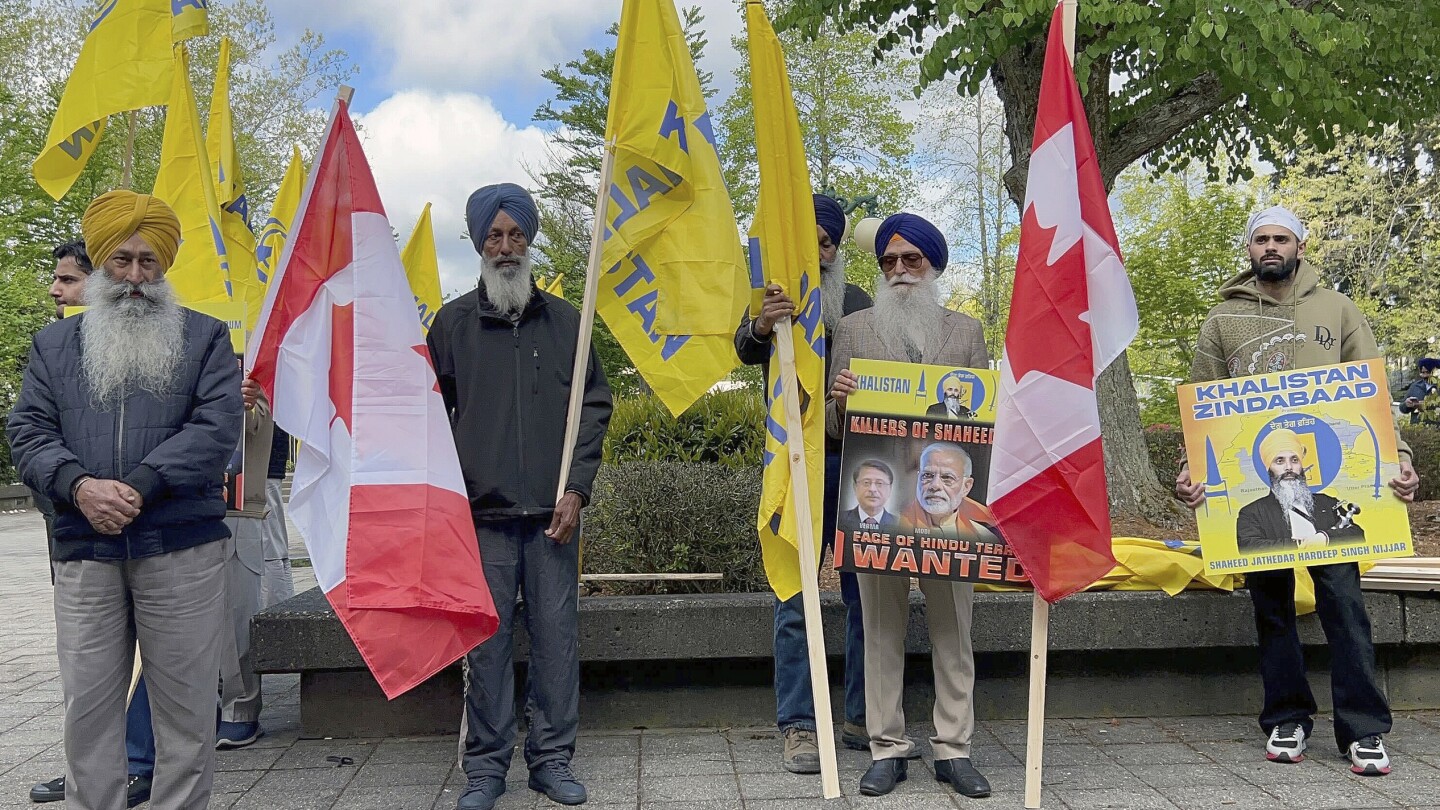
Protesters from the Guru Nanak Sikh Gurdwara demonstrated outside the provincial courthouse in Surrey after the three men charged in the case appeared via video link. The tensions between India and Canada have somewhat eased since the initial accusations, but the arrests have shed light on Canada’s permitting process for international students. It was revealed that a video posted online in 2019 by an India-based immigration consultancy showed Brar discussing his study permit, raising questions about how the suspects were able to study in Canada. Immigration, Refugees, and Citizenship Canada declined to comment on the suspects’ immigration status citing active investigations.
The arrests have brought attention to the complex relations between Canada and India, as well as the issue of international students potentially involved in criminal activities. The details of the case are still emerging as investigations continue, and the suspects await trial for their alleged involvement in the slaying of Nijjar. The diplomatic fallout from this case has highlighted the challenges faced by countries when dealing with crimes that have international implications. The Sikh community in Canada has been following the case closely, seeking justice for the victim and hoping for a resolution that will address the root causes of the conflict. Ultimately, the impact of this case on Canadian-Indian relations and the Sikh community in Canada remains to be seen as the legal process unfolds.