



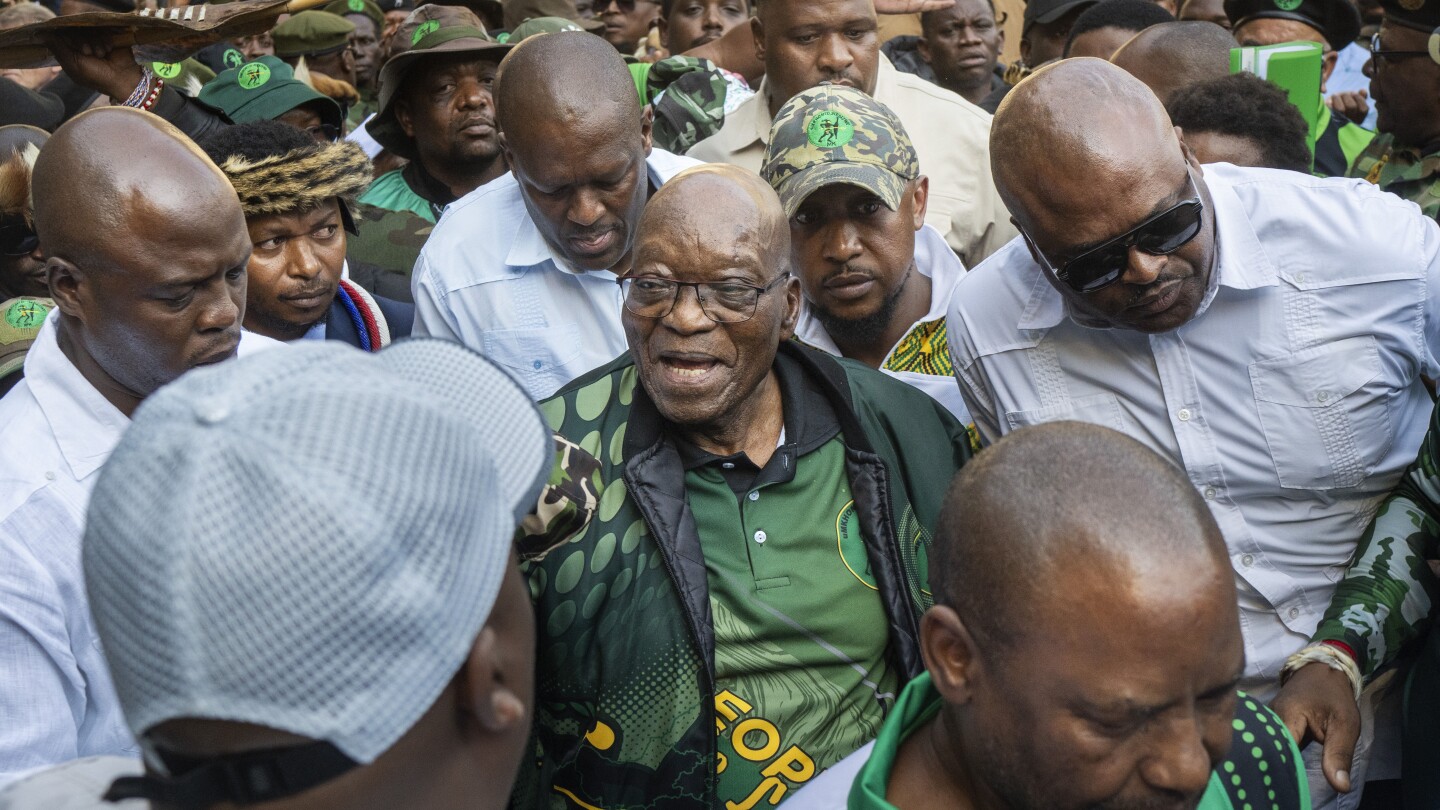
Former South African President Jacob Zuma has been barred from running for Parliament in the upcoming national election due to a previous criminal conviction, as ruled by the Constitutional Court. Zuma, who now leads the uMkhonto weSizwe Party, is campaigning against the ruling African National Congress (ANC), which has been in power since the end of apartheid. Analysts predict that the ANC may receive less than 50% of votes in the election and lose its parliamentary majority, marking its worst electoral performance since coming into power.
Zuma’s political career has been marked by controversy, from his time as a senior leader in the ANC during the liberation struggle to his presidency that was plagued by corruption allegations. Despite being convicted and sentenced to 15 months in jail for contempt of court in 2021, Zuma remains a prominent figure in South African politics. His return to the political scene with his new party threatens to divide the ANC’s support base and potentially impact the outcome of the upcoming election.
Zuma’s path to power included legal challenges, such as being found not guilty of rape in 2006 and facing corruption charges related to a notorious arms deal. His presidency was marred by allegations of corruption involving the Gupta family, leading to his resignation in 2018. The judicial commission of inquiry into state capture further implicated Zuma, resulting in his conviction and jail sentence. Despite this, Zuma has reemerged as a vocal critic of the ANC and President Cyril Ramaphosa, campaigning against his former party in an unexpected turn of events.
Zuma’s new party, uMkhonto weSizwe, has sparked controversy for its similarities to the ANC’s former military wing and its potential impact on the election. The charismatic Zuma has continued to rally support across the country through lively speeches and campaigning efforts. However, his disqualification from the election as a candidate for Parliament due to his previous conviction has raised questions about his political future. Despite this setback, Zuma’s party still poses a threat to the ANC, potentially emerging as a significant opposition force and influencing the political landscape in South Africa.
The Constitutional Court’s decision to bar Zuma from running for Parliament highlights the legal challenges he continues to face and the implications for his political ambitions. The ANC’s weakening grip on power, coupled with Zuma’s resurgence on the political scene, points to a changing dynamic in South African politics. As the country prepares for the national election, the outcome remains uncertain, with Zuma’s new party potentially playing a crucial role in shaping the future political landscape.