




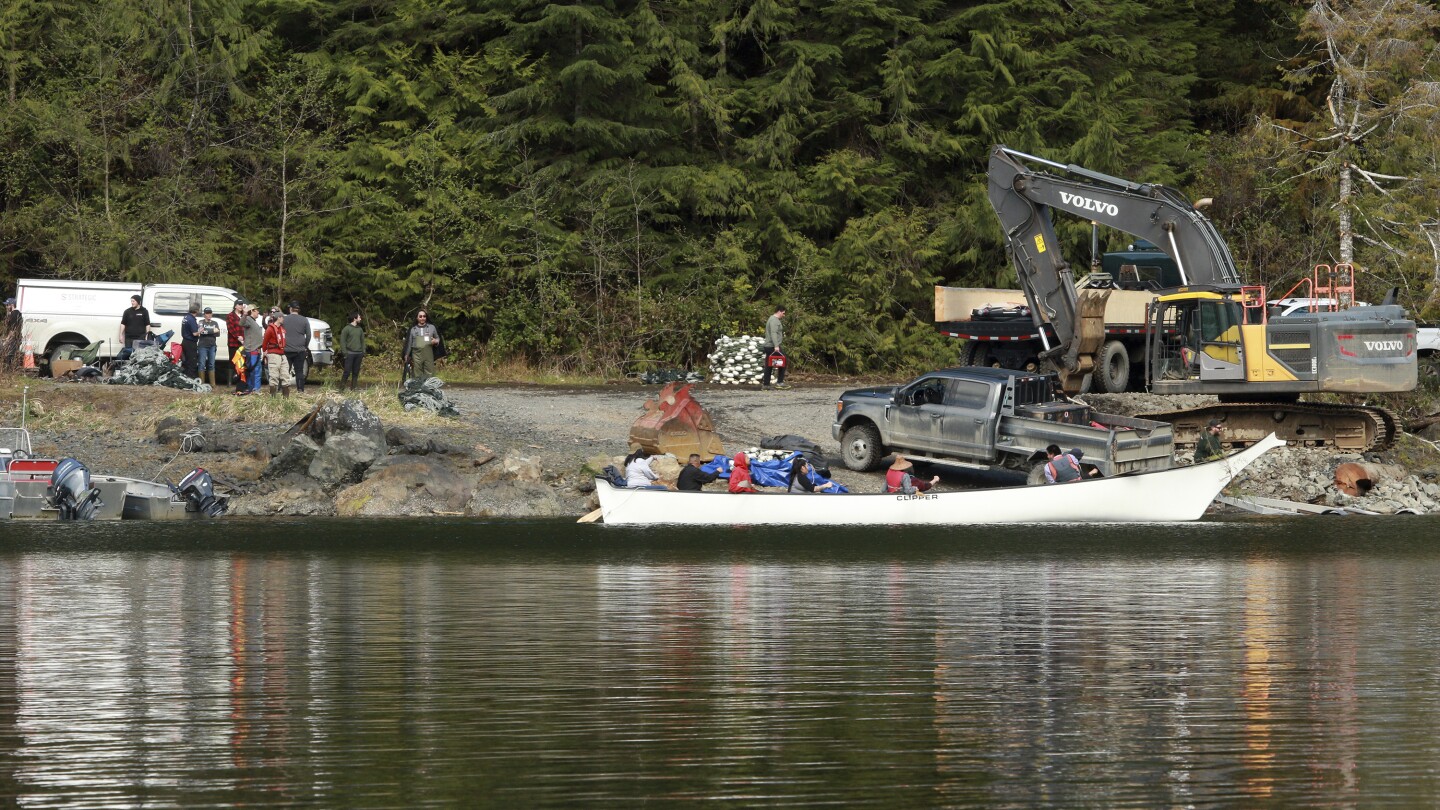
After an unsuccessful attempt to rescue an orphaned killer whale stranded in a remote lagoon on Vancouver Island, Ehattesaht First Nation Chief Simon John announced that the capture operation was in the “demobilization stage.” The 2-year-old calf has been alone in Little Espinosa Inlet for about three weeks after its pregnant mother died on March 23. The pair got into the lagoon by swimming through a narrow and fast-moving channel connecting it to the ocean. The rescue plan involves using boats, divers, and a net to corral the female calf into a shallow part of the 3-kilometer lagoon before placing her in a large fabric sling and hoisting her onto a transport vehicle.
Although the rescue operation was launched at 5 a.m. due to favorable weather conditions, the rescuers have been unsuccessful in capturing the young orca. Chief Simon John stated that they plan to try again in a couple of days and that the rescuers were currently “standing down.” The difficulties in capturing the orphaned whale may be due to its young age and the challenges of navigating the remote and rugged terrain of the area. Despite the setbacks, the team remains committed to the mission of rescuing the stranded calf and providing it with the care it needs.
The stranded orca calf’s plight has garnered significant attention and concern from local communities and wildlife conservation organizations. The young whale has been left vulnerable and in need of assistance after losing its mother, highlighting the challenges faced by orphaned marine animals in the wild. The efforts to rescue and rehabilitate the orphaned killer whale represent a collaborative endeavor between the Ehattesaht First Nation, wildlife experts, and government agencies to ensure the well-being of the stranded calf.
The ongoing rescue operation for the orphaned killer whale underscores the importance of conservation efforts to protect marine wildlife and their habitats. The challenges faced in capturing the young orca highlight the complexities of wildlife rescue and rehabilitation in remote and challenging environments. As the rescue team regroups and prepares for another attempt, the support and cooperation of various stakeholders remain crucial in ensuring the success of the mission to save the stranded calf and provide it with a chance for survival in its natural habitat.
The situation of the orphaned killer whale in the remote lagoon serves as a poignant reminder of the threats faced by marine animals in the wild, including habitat loss, pollution, and human interference. The need for proactive conservation measures to protect vulnerable species like the orca calf is evident, as their survival depends on the efforts of dedicated individuals and organizations working together for their welfare. The ongoing rescue operation symbolizes a ray of hope for the young whale and a testament to the commitment of those involved in safeguarding the future of marine wildlife in British Columbia and beyond.
As the rescue efforts continue and the team prepares for the next phase of the operation, the orphaned killer whale remains a symbol of resilience and the importance of preserving the natural environment for future generations. The collaborative response to the plight of the stranded calf reflects a shared commitment to wildlife conservation and the protection of endangered species. With the support of the community, wildlife experts, and government agencies, there is hope that the young orca will be successfully rescued and given a second chance at life in the vast waters of the Pacific Northwest.