





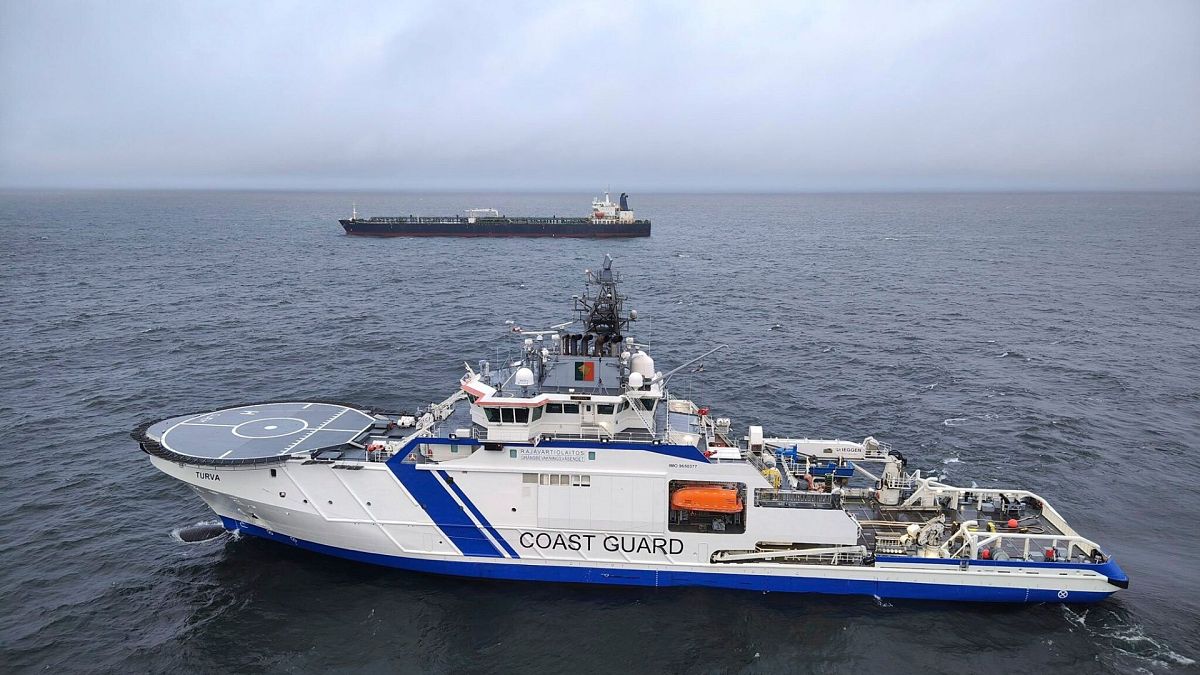
Finnish authorities are investigating damage to the Baltic Sea’s Estlink-2 power cable and multiple data cables, which they believe was caused by a vessel linked to Russia. The vessel in question, the Eagle S, is part of a fleet associated with evading Western sanctions on Russia. The Estlink-2 cable carries electricity between Finland and Estonia and suffered a rupture on December 25. This incident, along with earlier damage to two Baltic data cables and the Nord Stream pipeline, has been concluded as acts of sabotage by regional authorities. The anchor drag mark found on the seabed extends for dozens of kilometres, if not almost a hundred kilometres, and investigators are focusing on determining the intent behind the incident.
Chief investigator Sami Paila has stated that they have a preliminary understanding of the events leading to the anchor drag mark caused by the Eagle S vessel. The vessel has been seized for examination and has been escorted to an anchorage near the Finnish port of Porvoo to aid the investigation. Finnish authorities are considering potential criminal charges against the vessel, including aggravated interference with telecommunications, aggravated vandalism, and aggravated regulatory violations. Despite being flagged in the Cook Islands, the vessel is described as part of Russia’s shadow fleet of ageing fuel tankers that operate without Western-regulated insurance, posing environmental risks due to their age and lack of oversight.
The damage to the Estlink-2 power cable has prompted NATO to intensify patrols in the Baltic Sea, as confirmed by the alliance’s secretary general, Mark Rutte. Finland, which shares a border with Russia and joined NATO in 2023 in response to Russia’s invasion of Ukraine, is taking these incidents seriously. The investigation into the Eagle S vessel and its potential involvement in the damage to the power and data cables remains ongoing. The intent behind the incident is a critical focus of the probe, as Finnish authorities work to determine the full extent of the allegations against the vessel and those responsible for the damages to the underwater infrastructure in the Baltic Sea.
The vessel’s connection to Russia’s shadow fleet and the use of ageing tankers to evade sanctions highlights the ongoing tensions between Russia and Western countries. The incidents of sabotage in the region, including the damage to the Estlink-2 cable, underscore the risks posed by these shadow vessels and the potential for disruption to critical infrastructure. The involvement of the Eagle S vessel in these incidents has raised concerns about the security of the Baltic Sea and the need for increased vigilance in response to such threats. Finnish authorities are working to address the situation and hold those responsible for the damages accountable for their actions.
The investigation into the Eagle S vessel and its potential role in the damage to the power cable and data cables is ongoing, with Finnish authorities examining the evidence to determine the extent of the vessel’s involvement. The anchor drag mark found on the seabed has provided investigators with valuable information about the incident, but the intent behind the damage remains a key focus of the probe. As Finland continues to collaborate with international partners, including NATO, to address security concerns in the Baltic Sea, the importance of upholding maritime law and preventing acts of sabotage on critical infrastructure is underscored by these recent events.
The escalation of tensions in the region, as evidenced by the damage to the Estlink-2 power cable and the involvement of the Eagle S vessel, underscores the need for increased cooperation among NATO allies and regional partners to address security challenges in the Baltic Sea. The shadow fleet of ageing tankers used by Russia to evade sanctions presents a unique threat to maritime security and underscores the importance of vigilance in monitoring and responding to suspicious activities in the region. As the investigation into the Eagle S vessel continues and potential criminal charges are considered, the importance of upholding international law and deterring future acts of sabotage in the region remains a top priority for Finnish authorities and their allies.