



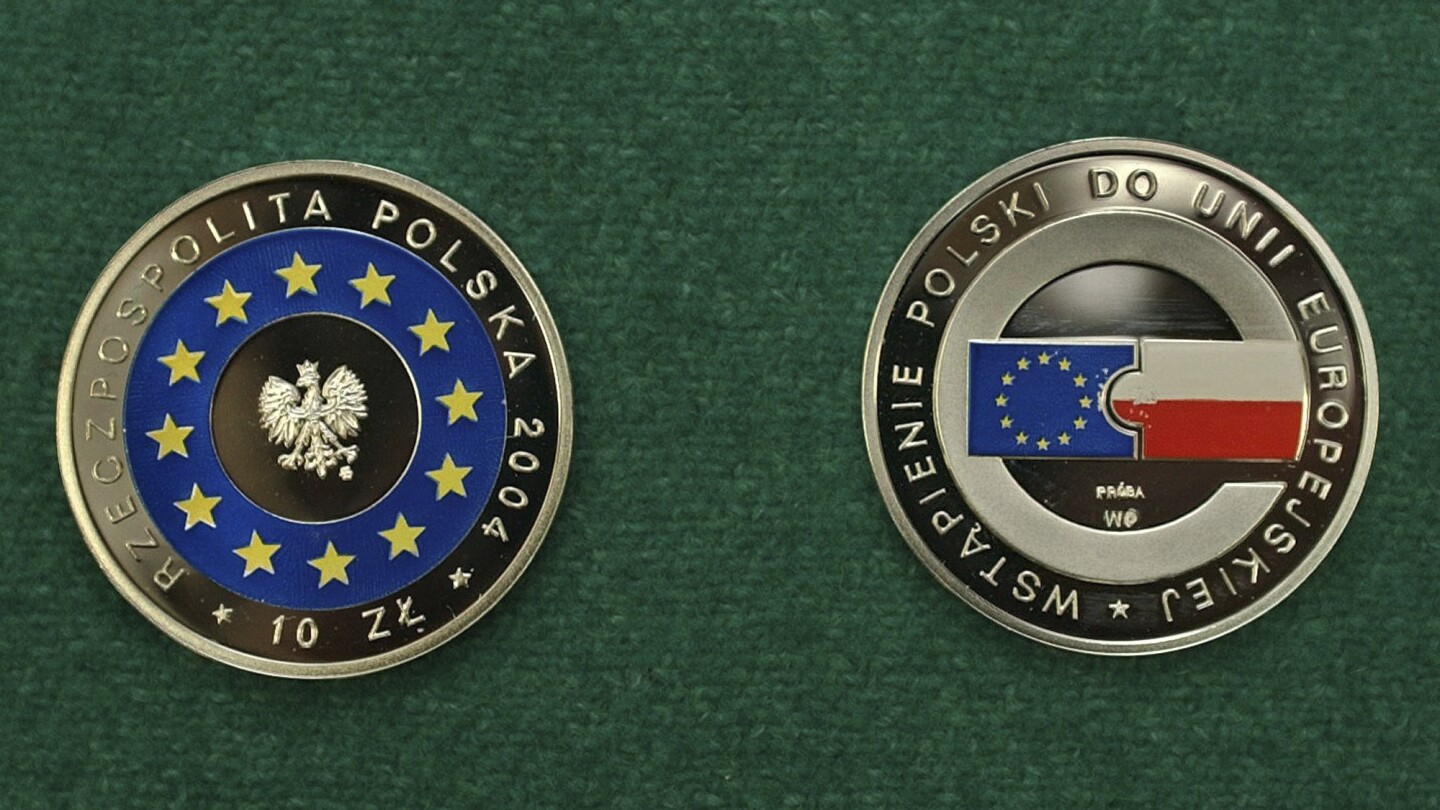
Poland’s Finance Minister, Andrzej Domański, has stated that the country is not yet ready to adopt the euro currency, despite being a member of the European Union for 20 years. Domański believes that Poland’s own currency, the zloty, has helped the country navigate through economic challenges, including the global financial crisis. He argues that joining the eurozone is not justified at this time and that maintaining the zloty has been beneficial for Poland.
On May 1, 2004, Poland joined the EU along with nine other countries. As part of the terms of membership, Poland committed to eventually replacing the zloty with the euro. However, two decades later, the country has not made the transition, citing the benefits of having its own currency. Despite being part of the EU for a significant amount of time, Poland continues to hold off on joining the currency union of 20 EU members.
The debate over Poland’s adoption of the euro currency is ongoing, with differing opinions within the government and among experts. While some advocate for Poland to eventually join the eurozone to further integrate with the EU, others, like Finance Minister Domański, emphasize the advantages of maintaining the zloty. The decision to adopt the euro is complex and requires careful consideration of the country’s economic stability and future prospects.
Poland’s stance on joining the eurozone reflects a broader trend within the EU, where some member states have chosen to retain their own currencies instead of adopting the euro. The eurozone has faced challenges in recent years, including economic disparities among member countries and the impacts of the COVID-19 pandemic. Poland’s decision to hold off on joining the currency union is a reflection of the varying perspectives on the benefits and drawbacks of euro adoption.
As Poland commemorates its 20th anniversary of EU membership, the discussion around the country’s potential adoption of the euro currency continues to be a prominent topic. The government’s stance on maintaining the zloty reflects its commitment to ensuring economic stability and independence. While the future of Poland’s currency remains uncertain, the debate over euro adoption will likely persist as the country navigates its relationship with the EU and the broader European economic landscape.