




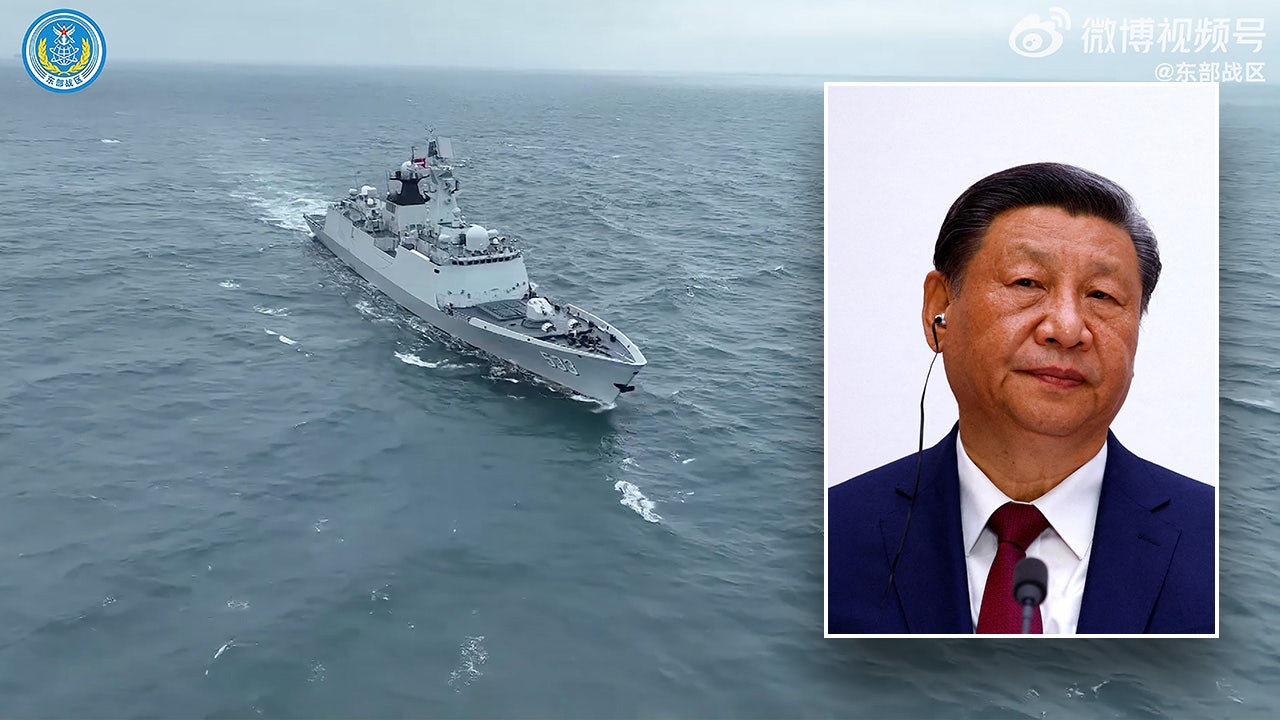
China recently conducted a 13-hour simulated blockade of Taiwan with a large number of planes, an aircraft carrier, and Navy and Coast Guard vessels, leading many to believe it was a punishment for comments made by Taiwan’s president. However, these exercises were planned in advance and aimed at threatening Taiwan’s security in order to wear down its military hardware and personnel, change the status quo of Taiwan’s independence, and undermine confidence in the Taiwanese government. The exercises were seen as a strategic move by China to weaken Taiwan and potentially target the United States.
The military drills were also intended to assess the United States’ response to potential crises in the Korean Peninsula and the Taiwan Strait, with the aim of convincing the U.S. that intervening in Chinese actions in the Taiwan Strait is not worth the risk. China’s Navy is considered a formidable force, with a large fleet of modern warships that have been launched since 2010. The lack of specific information about the timing and parameters of the exercises added to the tension surrounding the situation.
Despite the threatening nature of the military exercises, the atmosphere in Taiwan remained calm, with many people expressing nonchalance towards the encroaching Chinese presence. This acceptance of China’s actions as inevitable and uncontrollable was seen as a concerning development, indicating that the Taiwanese people may feel powerless to resist China’s incursions. China’s Coast Guard, equipped with warships and large vessels, also participated in the drills, further displaying its military capabilities.
The response from the United States to the military maneuvers was viewed as tepid and confusing, with State Department officials expressing concern over the provocative actions by the People’s Liberation Army. Some in Taiwan questioned the use of the term “disproportionate” in the State Department’s statements, as Taiwan had not engaged in any provocative behavior towards China. Calls for collective action from democratic nations, led by the United States, were made to counter China’s attempts to change the status quo in the region and maintain stability in the Taiwan Strait.
In light of the ongoing tensions and military threats from China, experts emphasized the need for Taiwan to update its National Security Strategy to address the changing security landscape and galvanize efforts towards peace and stability in the region. The strategic maneuvers by China were seen not only as a threat to Taiwan’s security but also as a way to test the resolve of the United States and other democratic nations in the face of Chinese aggression. The situation highlighted the complex geopolitical dynamics at play in the region and the need for coordinated responses to ensure peace and security in the Taiwan Strait.