




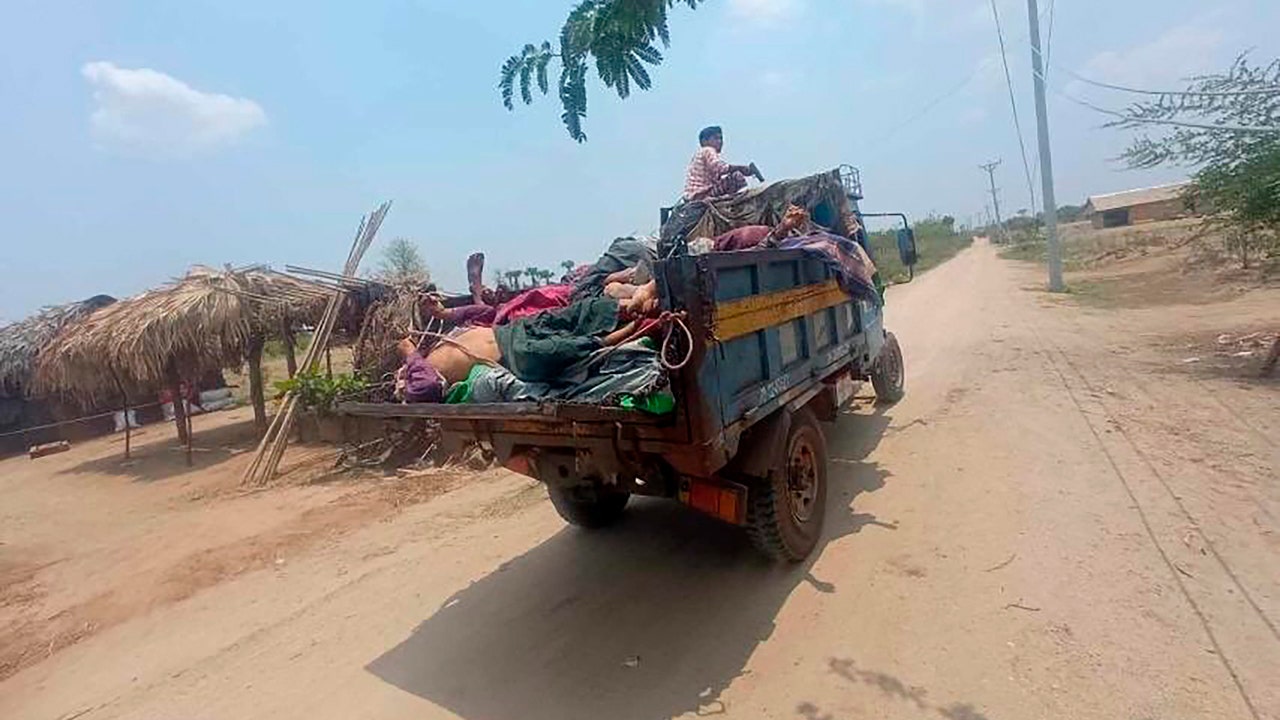
Last week, reports emerged of a massacre of over 30 civilians in Let Htoke Taw village in central Burma by soldiers from the military government. These reports were corroborated by interviews with a local administrator and a survivor of the killings. The military government, however, did not respond to requests for comments. This incident marked the latest in a series of mass killings in Burma’s ongoing civil war, which was sparked by the military’s seizure of power in February 2021.
The violent repression of peaceful protests against the military coup led to widespread armed resistance and a full-blown civil war in Burma. The recent mass killings in Let Htoke Taw, Magway, and Mandalay regions have highlighted the brutality of the conflict. The National Unity Government, a shadow government operating in opposition to the ruling military, supports armed resistance against the military forces. The killings in Let Htoke Taw were reportedly carried out during a search for resistance fighters from the Peoples Defense Force, the armed wing of the National Unity Government.
Survivors of the massacre in Let Htoke Taw described a harrowing ordeal where villagers were rounded up, interrogated, and then shot by soldiers. The survivor, who played dead after being shot in the left armpit, witnessed soldiers shooting the victims, burning their bodies, and destroying the village’s infrastructure. The administrator and survivors reported that soldiers burned down over 200 homes in Let Htoke Taw and destroyed water pumps. Sagaing region, where the village is located, has been a major battleground in the conflict, with widespread offensives by the military and forced displacement of civilians.
The violence in Let Htoke Taw is part of a larger pattern of human rights abuses and atrocities committed by the military government in response to armed resistance. The military has been accused of burning down villages, killing civilians, and displacing hundreds of thousands of people in its efforts to crush the resistance. The ongoing conflict has led to a humanitarian crisis in Burma, with civilians bearing the brunt of the violence and displacement. The international community has condemned the military’s actions and called for an end to the violence.
The mass killings in Let Htoke Taw and other regions highlight the urgent need for a peaceful resolution to the conflict in Burma. The National Unity Government, despite facing challenges and repression from the military, continues to operate as a legitimate opposition to the ruling regime. The civilian population in Burma remains vulnerable to the violence and atrocities perpetrated by the military, and efforts to protect and support affected communities are essential. The international community must step up its efforts to hold the military accountable for its actions and support a peaceful transition to democracy in Burma.
The survivors of the massacre in Let Htoke Taw and other affected communities in Burma are in urgent need of assistance and protection. The destruction of homes, infrastructure, and livelihoods has compounded the suffering of civilians caught in the conflict. Humanitarian organizations and agencies must scale up their efforts to provide aid, shelter, and support to those affected by the violence. The voices of survivors and witnesses must be heard, and justice must be served for the victims of the mass killings in Let Htoke Taw and other regions of Burma. Only through a concerted international effort to address the root causes of the conflict and support a peaceful resolution can lasting peace and stability be achieved in Burma.