




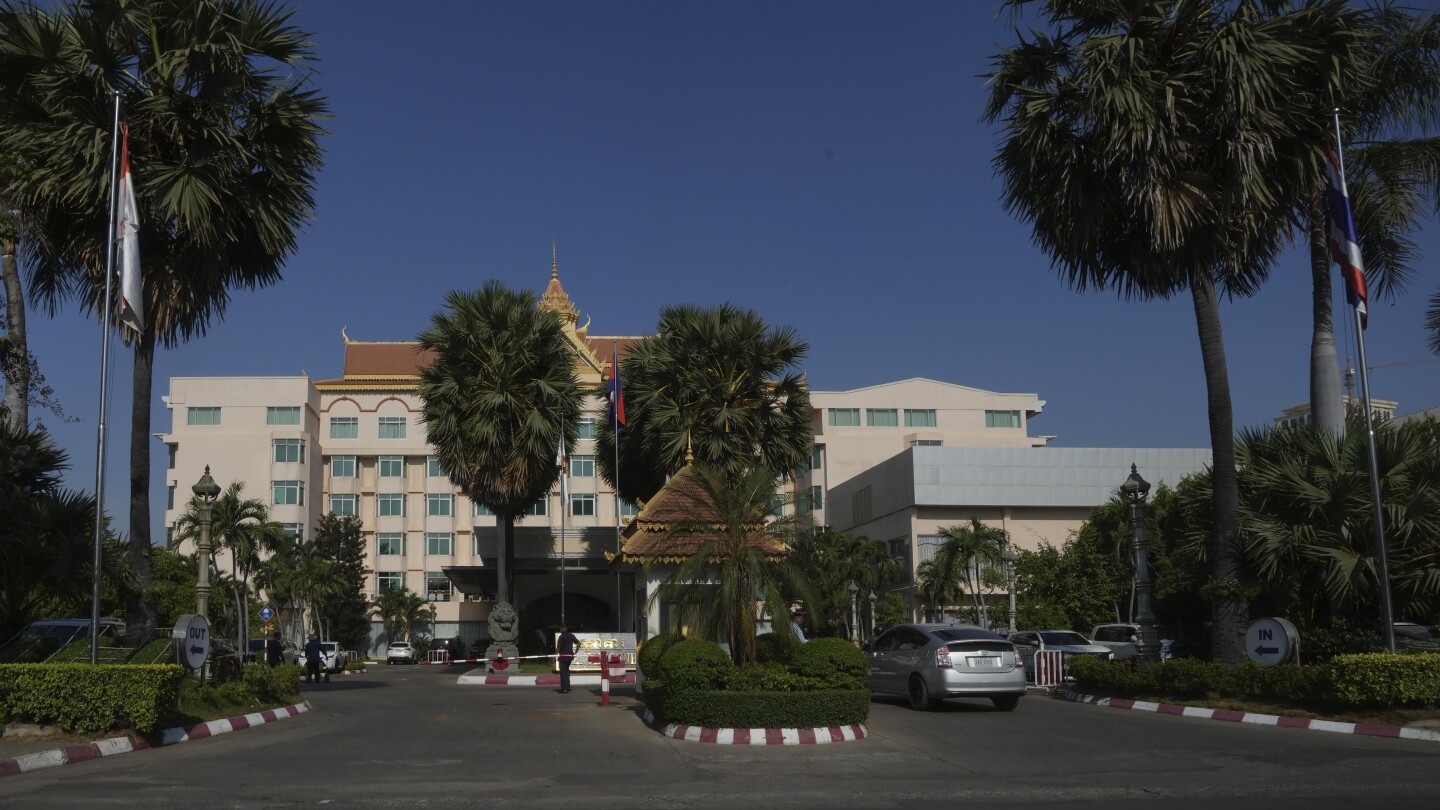
The European Union and United Nations have decided to reschedule the launch of an anti-human trafficking program in Cambodia due to concerns raised about the choice of venue. The event was initially planned to take place at the Phnom Penh Hotel, owned by a Cambodian tycoon Ly Yong Phat, who has been linked to human trafficking activities. While Ly Yong Phat himself has not faced any charges, a casino run by his business has been raided multiple times, with authorities rescuing victims of human trafficking.
Following questions raised by the Associated Press, the EU and U.N. agencies involved in the program decided to reschedule the event to a later date. The U.N. mentioned that the location of the event was under review, and the European Commission in Brussels declined to provide further details. The selection of the hotel as the venue was reportedly made by the Cambodian government, according to U.N. Resident Coordinator to Cambodia Joseph Scheuer. The issue of human trafficking is a significant concern in Southeast Asia, with thousands of individuals being trafficked and forced to work in illicit activities.
Cambodian authorities have acknowledged the existence of human trafficking and scam centers but have disputed the figures presented by the U.N. regarding the scale of the issue. Recent raids on properties owned by Ly Yong Phat’s L.Y.P. Group have resulted in the rescue of victims of human trafficking, who were forced to work in online scam operations. Victims rescued from these operations reported being recruited under false pretenses and then trafficked to Cambodia to work against their will. The EU-funded “PROTECT” initiative is being carried out in partnership with various U.N. agencies and the Cambodian Ministry of Labor and Vocational Training.
Critics have questioned the original decision to schedule an anti-trafficking event at a property owned by L.Y.P. Group, given the history of human trafficking activities at the O’Smach Resort. Experts have emphasized the need for enhanced due diligence by the international community when engaging with Cambodia to avoid legitimizing actors involved in such activities. While low-level workers have been arrested in raids on scam centers, the landlords and protectors of these operations appear to be untouchable. It remains to be seen how the EU and U.N. will address the concerns raised about the venue choice for the anti-human trafficking program launch in Cambodia.