



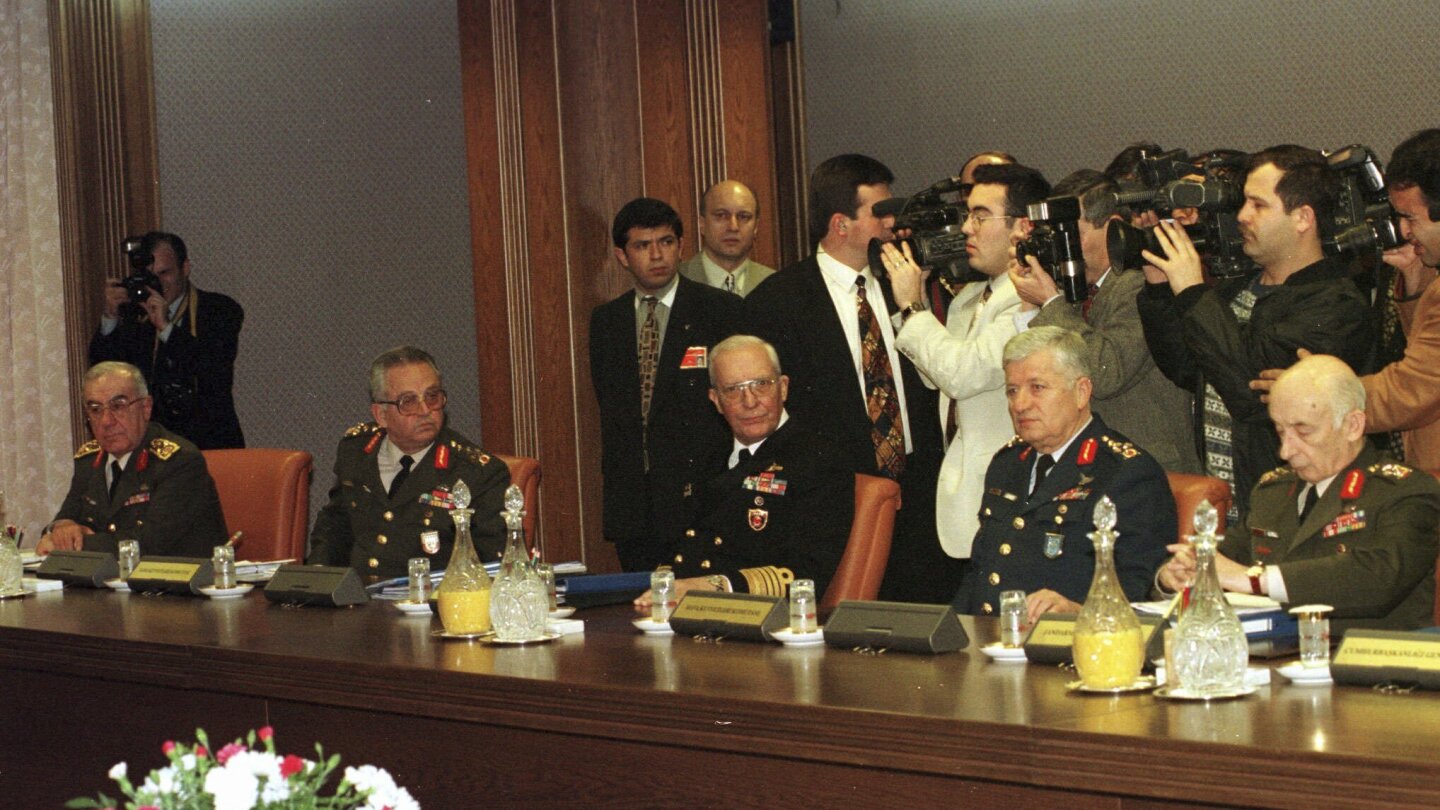
In an unexpected move, Turkish President Recep Tayyip Erdogan pardoned seven former top military officers on Friday. These officers had been sentenced to life in prison for their involvement in the ouster of an Islamic-led government in 1997. The decision to pardon them was based on their health issues and old age, as stated in the country’s Official Gazette. The generals, who are now in their late 70s and 80s, had been convicted in 2018 for their part in a campaign led by Turkey’s pro-secular military that forced the resignation of then-Prime Minister Necmettin Erbakan. The court of appeals had confirmed their sentences in 2021.
Among those released due to this decision were Cetin Dogan, who was 83 years old and head of military operations during the events of 1997. Another released officer was former Gen. Cevik Bir, who is 85 years old and had been deputy chief of military staff at the time. The main defendant in the case, former Chief of General Staff İsmail Hakkı Karadayı, had passed away in 2020 while the appeals process was still ongoing. The ouster of Erbakan’s government in 1997 came after the military, concerned about his efforts to elevate Islam’s prominence in Turkey, threatened action through the National Security Council. Erbakan eventually resigned four months later.
This pardon comes in the context of Erdogan’s efforts to hold military officers accountable for their interference in government matters. The Turkish military, historically seen as the guardian of the country’s secular traditions, had carried out three coups between 1960 and 1980. In 2016, Turkey faced and thwarted a coup attempt that the government attributed to followers of Fethullah Gulen, a U.S.-based Muslim cleric. Despite Gulen’s denial of involvement, the government’s crackdown on his alleged supporters has been ongoing. The recent pardon by Erdogan follows a meeting with the main opposition party leader Ozgur Ozel, who had raised the issue of clemency. Ozel’s Republican People’s Party had achieved significant success in local elections held in March, indicating a potential shift in political dynamics within Turkey.
Overall, the decision to pardon these former military officers involved in the events of 1997 has sparked debates and raised questions about the country’s past and ongoing struggles between secular and Islamic influences. The move reflects Erdogan’s push for accountability within the military while also navigating complex political dynamics in Turkey. The release of these officers, based on health and age considerations, signals a symbolic gesture towards reconciliation and closure on a tumultuous chapter in the nation’s history. However, it also brings to light the lingering tensions and divisions within Turkish society, particularly concerning the role of the military and the balance of power between secular and religious forces. As Turkey continues to grapple with its past and present challenges, the significance of this pardon reverberates across political, social, and historical realms, shaping the country’s trajectory moving forward.