



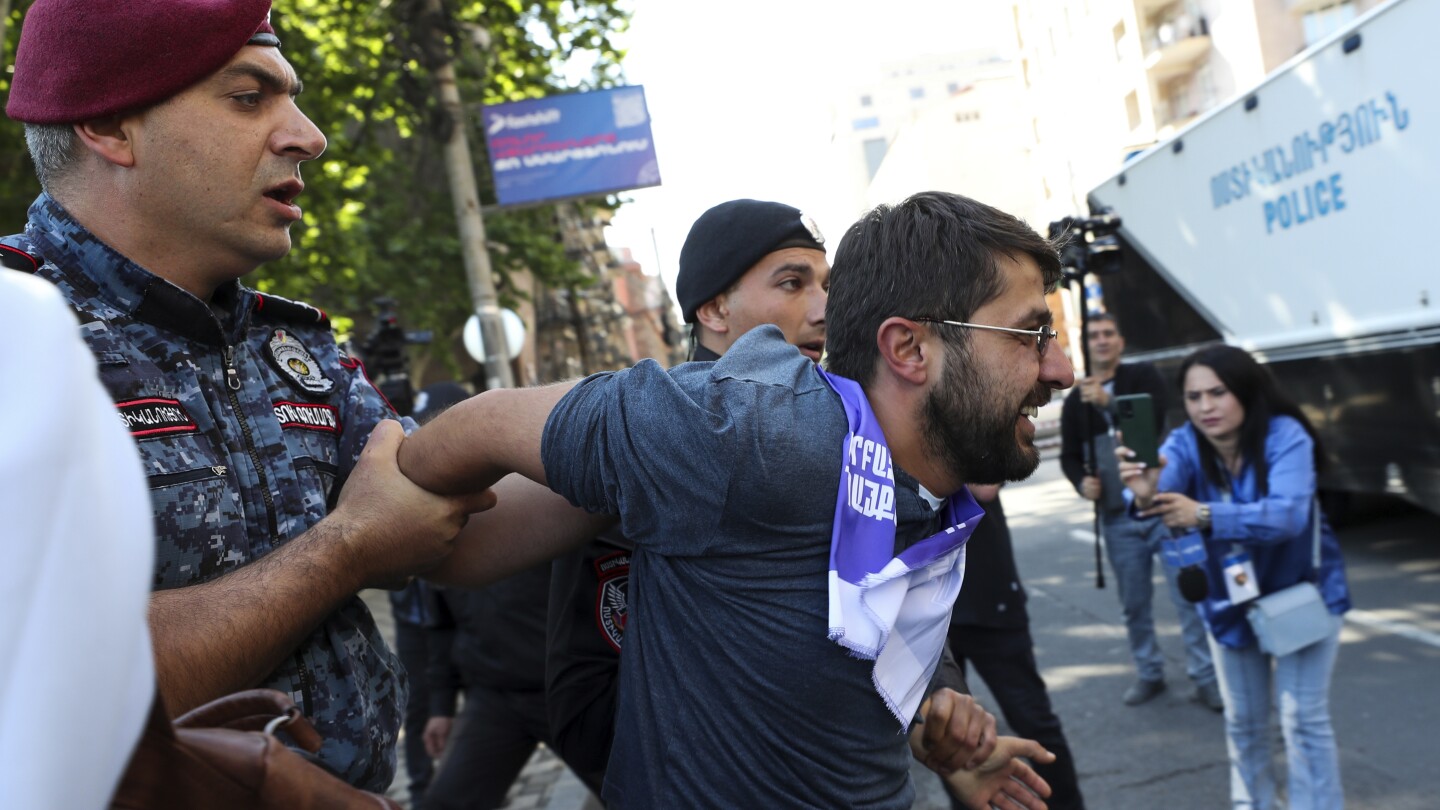
Protests in Armenia demanding the resignation of Prime Minister Nikol Pashinyan escalated on Monday as demonstrators blocked main streets in the capital city of Yerevan and clashed with police. The protests, which have been ongoing for weeks, were sparked by the government’s decision to return four border villages to Azerbaijan. Led by high-ranking cleric Bagrat Galstanyan, the protests have expanded to encompass a range of complaints against Pashinyan and his government. The demonstrations have gained momentum, with supporters of the Tavush for the Homeland movement advocating for Galstanyan to become the next prime minister.
The decision to hand over the villages in Tavush came after a military campaign in September, during which Azerbaijan’s military successfully forced ethnic Armenian separatists in the Karabakh region to surrender. Following the conflict, approximately 120,000 people, predominantly ethnic Armenians, fled the area. Ethnic Armenian fighters had controlled Karabakh since 1994 after a war with Azerbaijan, but the territory was partially reclaimed by Azerbaijan in 2020 after the end of an armistice supervised by a Russian peacekeeping force. Concerns over defining the border with Azerbaijan to prevent future hostilities have been raised by Pashinyan.
In addition to the political unrest, Armenia is facing a natural disaster, as severe flooding in the Tavush region and surrounding areas has caused significant damage and loss of life. At least four people have been reported dead, and over 400 others have been evacuated due to the flooding. The head of Armenia’s national rescue service, Kamo Tsutsutsyan, stated that several settlements are cut off by floodwaters, and efforts are underway to reach those stranded, including the construction of a cableway. The combination of political turmoil and the humanitarian crisis caused by the flooding has heightened tensions in the country.
The protests in Armenia have garnered international attention, with observers noting the complex political and social dynamics at play in the country. The demands for Pashinyan’s resignation reflect widespread dissatisfaction with his leadership and the handling of key issues, such as border disputes and flood management. The involvement of religious leaders, such as Archbishop Galstanyan, adds another layer of complexity to the situation, highlighting the intersection of politics and religion in Armenian society. The ongoing demonstrations signal a deep-seated desire for change and accountability within the government.
As the protests continue and the situation in Armenia remains tense, there are concerns about the potential for further violence and instability. The outcomes of the demonstrations could have far-reaching implications for the country’s political landscape and future developments in the region. The government’s response to the protests and its efforts to address the grievances of the demonstrators will be closely watched both domestically and internationally. The convergence of political, social, and environmental crises in Armenia underscores the urgent need for effective governance and responsive leadership to navigate these challenging times.