




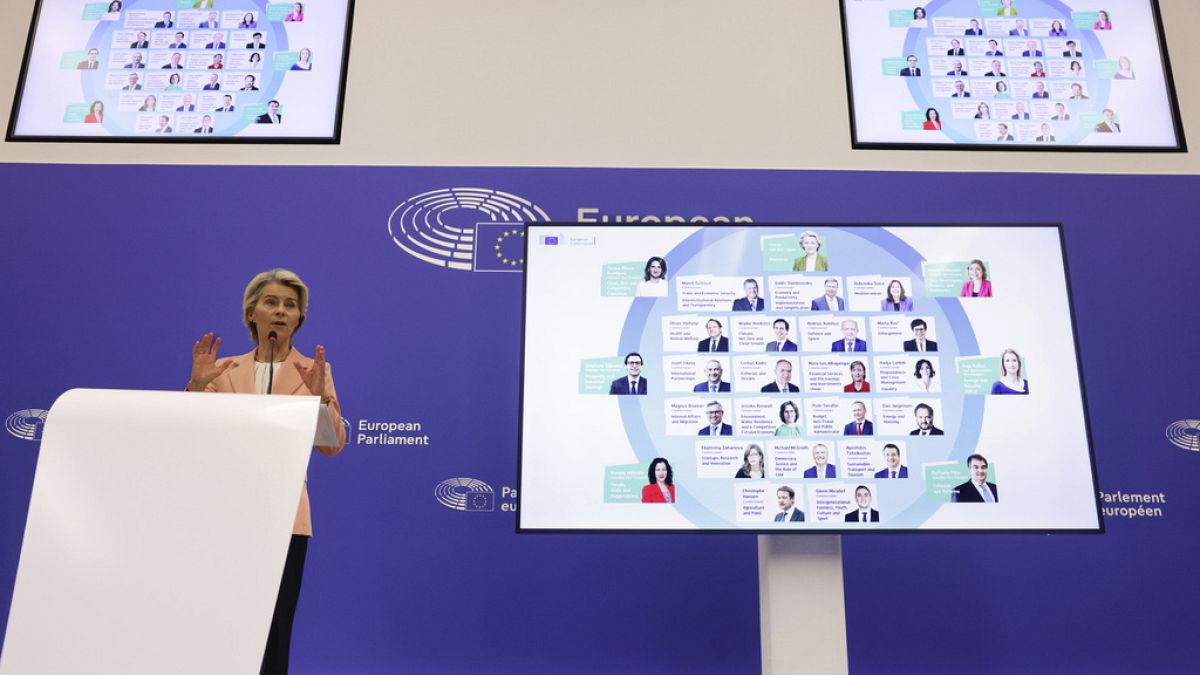
The confirmation hearings for the nominees for the future European Commission will begin on November 4th at the European Parliament. These nominees will have to prove that they have the qualifications and political profile to take on the portfolios assigned to them by President Ursula Von der Leyen. The process involves a grilling where they will be questioned by MEPs from different political groups. This process is essential as Commissioners are elected indirectly and do not go through a popular vote, making the European Parliament the essence of democracy in Europe.
The first stage of the hearings took place in the Parliamentary Committee on Legal Affairs, where the nominees’ declarations regarding potential financial and professional conflicts of interest were analyzed. From November 4th onwards, hearings with legislators from the committees of the European Parliament will take place, depending on the policy area(s) in which the Commissioner will work. The hearing will begin with a 15-minute presentation by the Commissioner on his/her priorities, followed by a question and answer session with MEPs, and will end with final statements from the Commissioner-designate.
About half of the commissioners come from the centre-right EPP party, with five from the Socialists and Democrats and another five from the liberal Renew Europe party. There is one member each from the right-wing Patriots for Europe and the European Conservatives and Reformists. The European Parliament is exerting its power in this process, creating a climate of “tit for tat” among the various political parties. The goal is to ensure that the European Commission is up and running by December 1st, but this crucial test of the confirmation hearings must be passed first.
If some nominees do not pass the grilling process, in some member states, the head of state or government quickly nominates another person, while in other countries, the process is more complex and requires approval from other institutions. The European Parliament plays a significant role in this process and holds the most power over the European Commission at this time. The nominees will have to demonstrate their capabilities and expertise in order to move forward with their roles within the future European Commission.
The confirmation hearings have seen nominees being rejected in the past, with three being rejected in 2019 and several others in previous years. This emphasizes the importance of the process and the need for nominees to thoroughly prepare for their hearings. The role of the European Parliament in this process is crucial as they play a key part in ensuring that the future European Commission is made up of qualified and capable individuals. The upcoming confirmation hearings will be closely watched by citizens and political analysts alike as they determine the composition of the European Commission and its ability to address various challenges in the future.