




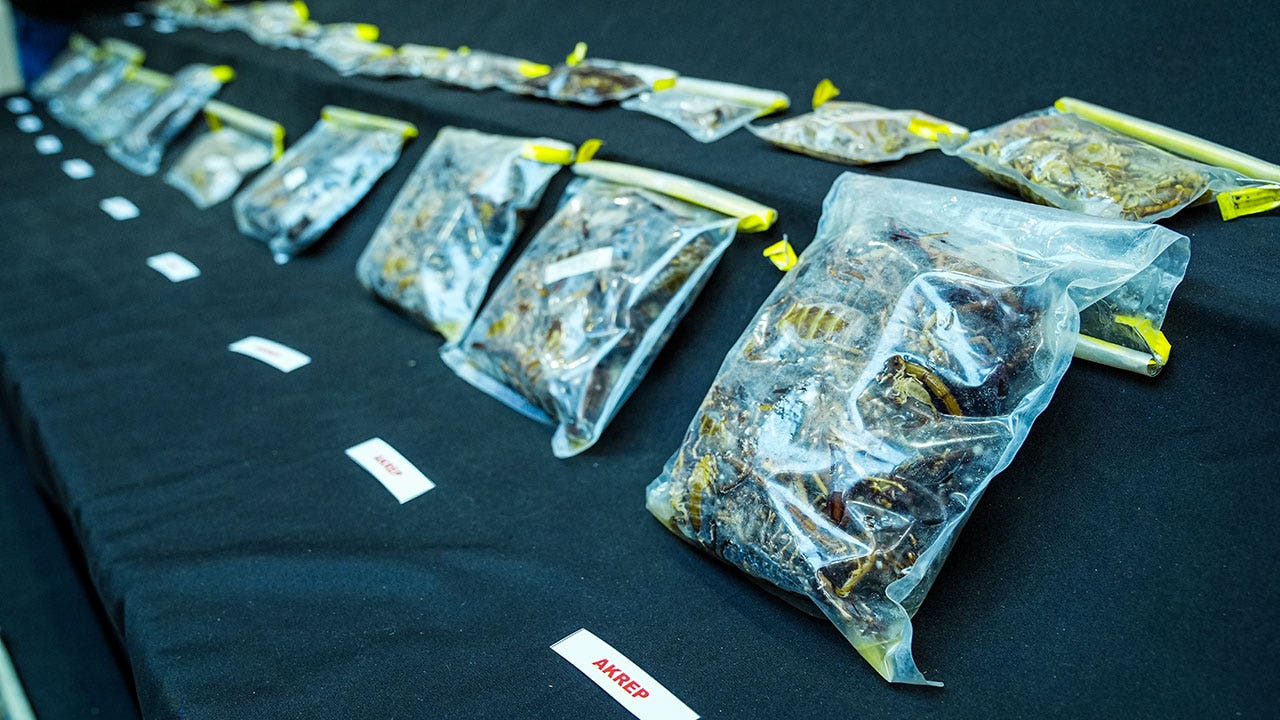
Lorenzo Prendini, a curator at the American Museum of Natural History, was detained in Istanbul on Monday for allegedly attempting to smuggle spider and scorpion samples out of the country. Despite claiming to have permits from the Turkish government for his research, he was held by police at Istanbul Airport with around 1,500 samples in hand. Prendini, an expert on arachnids at the New York-based museum, was detained on suspicion of attempting to smuggle species found in Turkey.
Video footage showed officers searching Prendini’s hand luggage and removing plastic bags filled with dead spiders and scorpions. In an email to The Associated Press, Prendini expressed that the Turkish police had disregarded the permits from the government, which allowed him to conduct his research in collaboration with Turkish scientists. He also criticized the reliance on the testimony of an ‘expert’ who had a conflict of interest with Prendini’s collaborators and questionable scientific research. Prendini accused the police of violating due process and trying to find him guilty in the court of public opinion.
Prendini is listed on the museum’s website as the curator of its spider, scorpion, centipede, and millipede collections. His research on spiders and scorpions has taken him to over 30 countries. Despite his credentials, Prendini found himself the subject of a scandal in Turkey due to the allegations of smuggling spider and scorpion samples. The incident highlights the challenges faced by scientists conducting research internationally and the potential legal implications of transporting samples across borders.
The alleged smuggling case involving Prendini has caused a stir in the scientific community, with concerns raised about the treatment of researchers and the importance of acquiring proper permits for research purposes. Prendini’s detention in Istanbul sheds light on the complexities of conducting fieldwork in foreign countries and the need for transparency and cooperation with local authorities. The incident serves as a cautionary tale for scientists working in sensitive areas and emphasizes the importance of following legal protocols when collecting samples for research.
The museum curator’s detainment in Istanbul highlights the delicate balance between scientific research and legal regulations governing the transport of samples across borders. Prendini’s case raises questions about the role of permits, conflicts of interest, and due process in international research collaborations. The incident underscores the need for clear communication and adherence to local laws when conducting fieldwork in foreign countries. The outcome of Prendini’s case could set a precedent for how scientists are treated when conducting research abroad and the potential consequences of failing to comply with legal requirements.
As Prendini faces allegations of smuggling spider and scorpion samples in Turkey, the case has attracted attention from the media and the scientific community. The incident casts a shadow over international research collaborations and highlights the challenges faced by scientists working in different countries. Prendini’s detention serves as a reminder of the importance of following proper procedures and obtaining the necessary permits when conducting research abroad. The outcome of his case will likely have far-reaching implications for how scientists navigate the complexities of fieldwork in foreign countries and the legal ramifications of transporting samples across borders.