




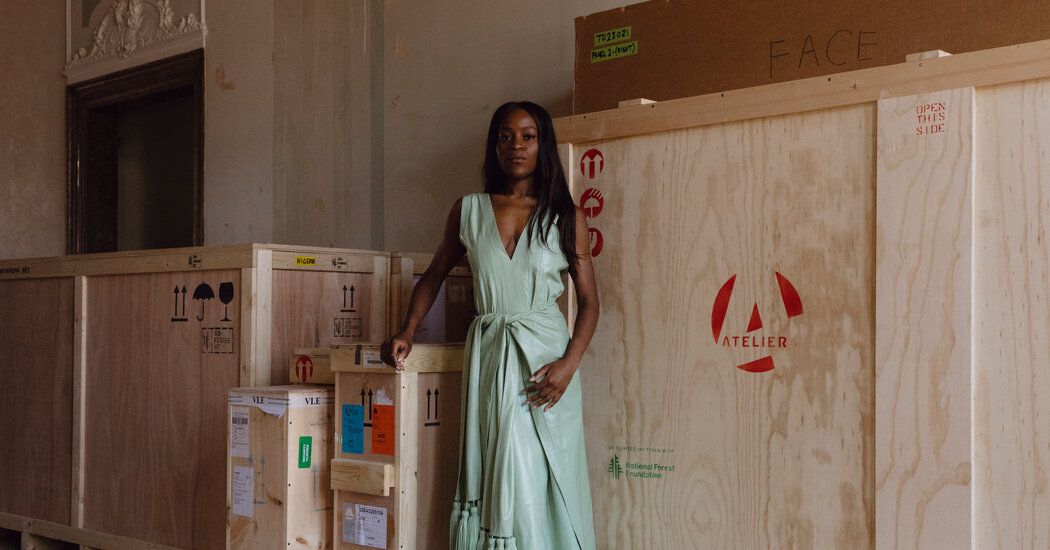
Lagos, Nigeria’s largest city, is known for its boisterousness, which residents wear as a point of pride. Artist and poet Precious Okoyomon recorded interviews with 60 city residents in January for an art project intended to be presented in the Nigeria Pavilion at the Venice Biennale. The piece is a sonic and sculptural installation that mixes poems, music, and passages from the interviews to create a powerful sound piece that taps into the unconscious of the city.
The Nigeria Pavilion at the Biennale is titled “Nigeria Imaginary” and features projects by eight artists, including Yinka Shonibare, Tunji Adeniyi-Jones, Ndidi Dike, Toyin Ojih Odutola, and Fatimah Tuggar. These projects cast an oblique but pointed look at history, exploring themes ranging from the Benin Bronzes to police violence in Nigeria. The works suggest fresh ways for Nigerians and the world to think of the country, which is often dismissed as a place of crisis or corruption.
To organize a national pavilion at the Biennale is a significant undertaking that sends a message about cultural investment and representation. This year, Nigeria’s pavilion was funded by private backers and organized by the Museum of West African Art, conveying a commitment to contemporary art. The pavilion showcases the work of artists with Nigerian roots, some of whom grew up overseas or moved away from Nigeria at some point, reflecting the complex nature of the Nigerian experience.
The theme of the Nigeria Pavilion, “Nigeria Imaginary,” references sociological theories of nationhood or the illusions we tell ourselves to find structure in our surroundings. The projects in the pavilion prompt visitors to consider Nigeria’s past and present, reflecting on the country’s problems and possibilities. The curator of the pavilion, Aindrea Emelife, hopes the exhibition will prompt more expansive dreaming about Nigeria, energizing viewers to think optimistically about the country’s potential.
The diverse projects in the Nigeria Pavilion offer a multifaceted view of the country, from sculptures made of police-grade batons to charcoal and pastel works depicting gender-flexible characters. These works reimagine Nigeria as a space where creativity thrives and where there is room for change and freedom. By presenting contemporary art that engages with historical and social issues, the pavilion aims to challenge preconceived notions about Nigeria and highlight its cultural richness and complexity.
The Nigeria Pavilion at the Venice Biennale represents a significant moment for Nigerian contemporary art and cultural representation on the global stage. By showcasing the work of talented artists with Nigerian roots and exploring themes relevant to the country’s history and current challenges, the pavilion offers a nuanced and thought-provoking perspective on Nigeria’s identity and potential. Through the diverse projects on display, visitors are invited to engage with Nigeria’s past, present, and future, sparking conversations about the country’s cultural significance and artistic vitality.