






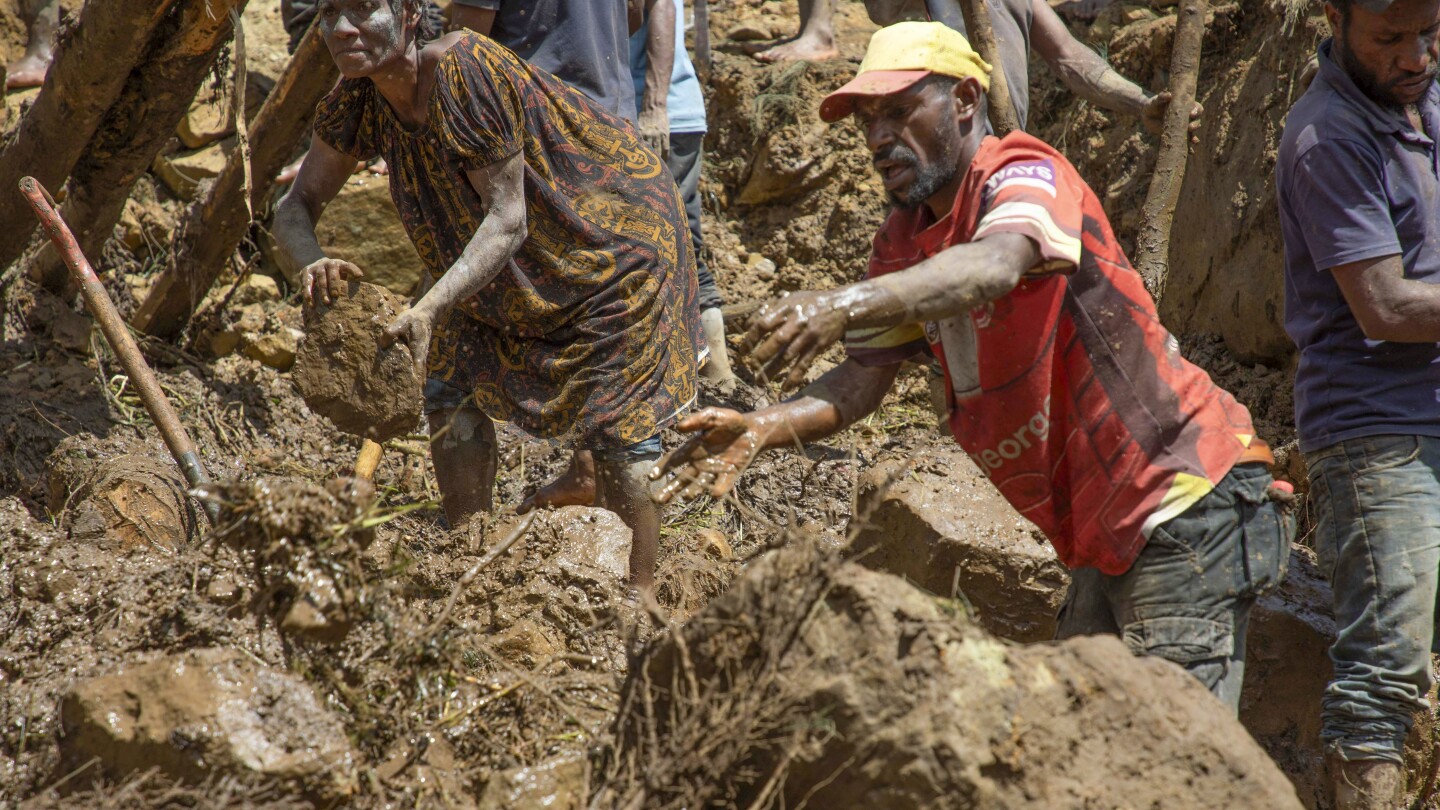
Authorities in Papua New Guinea are facing the threat of a second landslide and a potential disease outbreak in the aftermath of a devastating disaster that struck the village of Yambali. The initial landslide, which occurred last Friday, resulted in the burial of an estimated 2,000 people under tons of debris. Recent rain has made the situation more unstable, with water streams and bodies trapped beneath the rubble, increasing the risk of further landslides. A mass evacuation is being considered, with concerns that up to 8,000 people may need to be relocated to safety.
The International Organization for Migration and the Papua New Guinea government have been working to provide shelter and assistance to the displaced survivors. However, the unstable conditions at the disaster site present a major challenge, as the debris continues to move and pose a threat to nearby communities. The U.N. has highlighted the urgent need to evacuate and relocate the affected population, which includes a significant number of children under 16. Efforts are underway to establish evacuation centers and ensure the safety of those at risk.
As the situation unfolds, concerns about the health risks associated with decaying bodies and contaminated water have been raised. The potential for disease outbreaks in the area adds another layer of urgency to the ongoing response efforts. A virtual meeting of national and international responders has been held to address these concerns and coordinate the deployment of resources to the affected region. Geotechnical experts and heavy earth-moving equipment are being mobilized to assess the site and support the relocation of survivors to safer ground.
The Australian government has stepped in to provide support to Papua New Guinea, sending a disaster response team equipped with drones and geohazard assessment capabilities. Efforts to clear debris, recover bodies, and assist displaced individuals are being coordinated with the assistance of international partners. Australia has pledged an initial aid package of 2.5 million Australian dollars to support the relief efforts in Papua New Guinea. Meanwhile, local efforts, including the use of excavators and assistance from humanitarian agencies, are also underway to address the immediate needs of the affected communities.
Survivors of the landslide have shared their harrowing experiences, with some reporting being trapped for hours before being rescued by neighbors. The emotional toll of losing loved ones and the physical challenges of searching through debris for remains have added to the trauma faced by residents of Yambali. The resilience and solidarity of the community have been evident, with individuals expressing gratitude for the assistance they have received during this difficult time. As the recovery efforts continue, the focus remains on ensuring the safety and well-being of those affected by the disaster.
The road to recovery for the village of Yambali and its surrounding areas will be long and challenging, requiring sustained support and resources. The immediate priorities include evacuating at-risk individuals, addressing health concerns, and providing essential services to those affected. As the international community rallies around Papua New Guinea in this time of crisis, the need for solidarity and collaboration is clear. With continued coordination and assistance, the affected communities can begin to rebuild and heal from the trauma of this devastating landslide.