





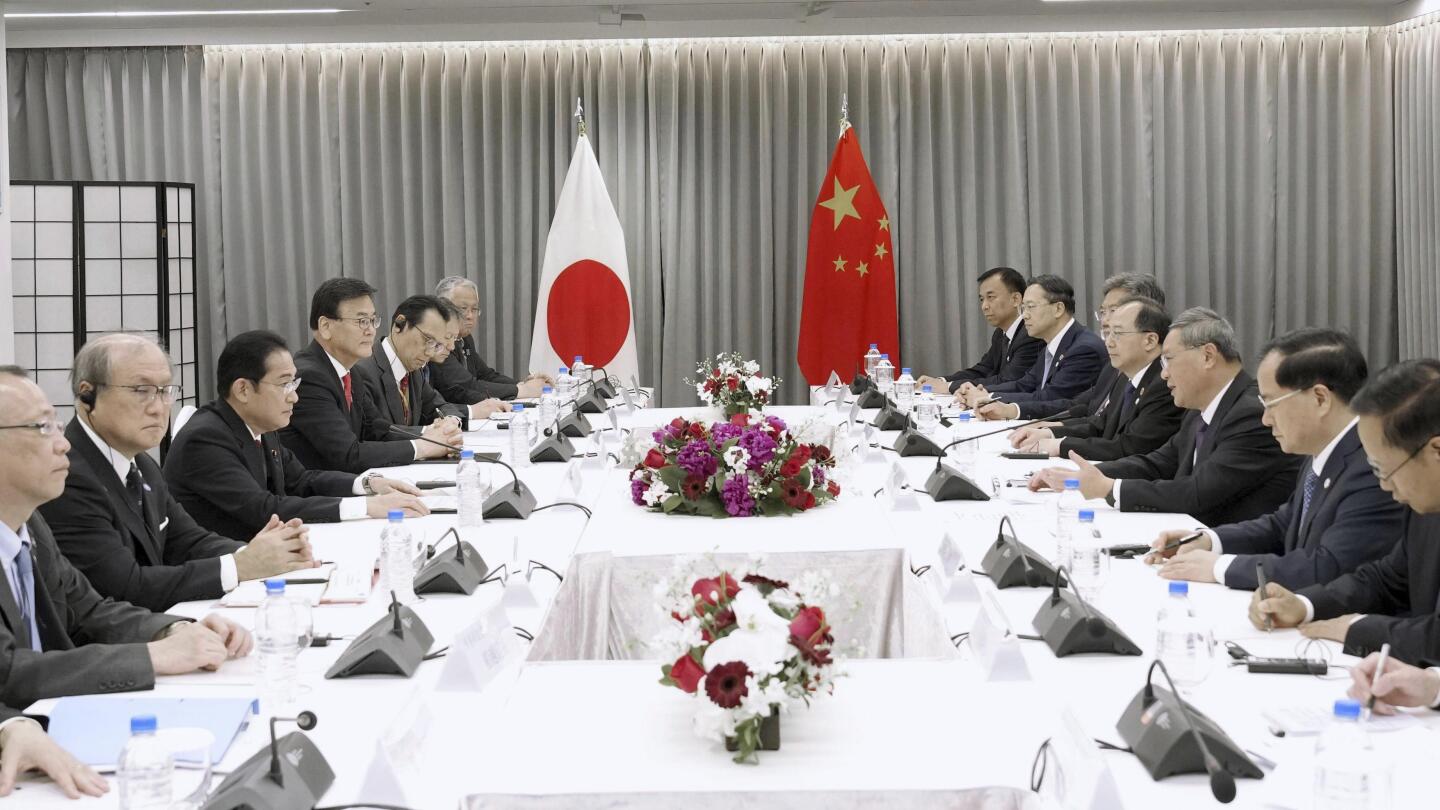
China’s premier, Li Qiang, met with South Korean President Yoon Suk Yeol and Japanese Prime Minister Fumio Kishida in Seoul to discuss reviving three-way cooperation among the countries. The meeting marked the first trilateral meeting between the nations in more than four years and focused on economic issues such as supply chains and a potential free trade deal. While the leaders emphasized the importance of promoting cultural exchanges and addressing shared challenges, such as environmental and health issues, concerns were raised about expanding security cooperation between Japan, South Korea, and the United States.
During a joint news conference, Li expressed unease about Japan and South Korea bolstering their security partnership with the U.S., which China views as an attempt to contain its influence. Li called for honest dialogues to enhance trust and maintain bilateral relations, emphasizing the importance of strategic autonomy and opposing the formation of blocs. China has been wary of Japan’s plans to deploy U.S. missiles and conduct military drills with the U.S. and South Korea, raising tensions in the region and drawing protests from China.
The trilateral meeting also addressed North Korea’s plan to launch a satellite, which has been viewed as a violation of U.N. sanctions. South Korea, Japan, and the U.S. have urged China to use its leverage to persuade North Korea to abandon its nuclear ambitions. During bilateral meetings, leaders discussed promoting peace on the Korean Peninsula and expressed concerns about regional developments, including China’s actions in the South China Sea, Hong Kong, Xinjiang, and Taiwan. China’s military assertiveness and human rights abuses have raised red flags among its neighbors.
The three Asian nations, collectively representing 25% of global GDP, have close economic and cultural ties but have experienced setbacks in their relations due to historical issues and geopolitical tensions. Despite efforts to improve cooperation, issues related to Japan’s wartime aggression, China’s global ambitions, and U.S. alliances in the region have strained relations among the countries. The trilateral meeting between China, South Korea, and Japan, which was meant to be an annual occurrence, faced delays due to the COVID-19 pandemic and complex ties among the nations. While all three countries seek better relations, China’s concerns about security ties between South Korea, Japan, and the U.S. continue to be a point of contention.
Experts believe that the trilateral summit was more about reducing frictions than reshaping geopolitics, with an emphasis on addressing long-standing issues and finding common ground. Despite differences and challenges, the three countries recognize the importance of cooperation in addressing shared challenges and promoting regional peace and stability. As the three nations navigate complex geopolitical dynamics and economic uncertainties, the revival of trilateral cooperation signals a willingness to engage in dialogue and find solutions to mutual concerns. With each country having its own strategic interests and priorities, the path to deeper cooperation may require ongoing dialogue and compromise to overcome existing obstacles.