




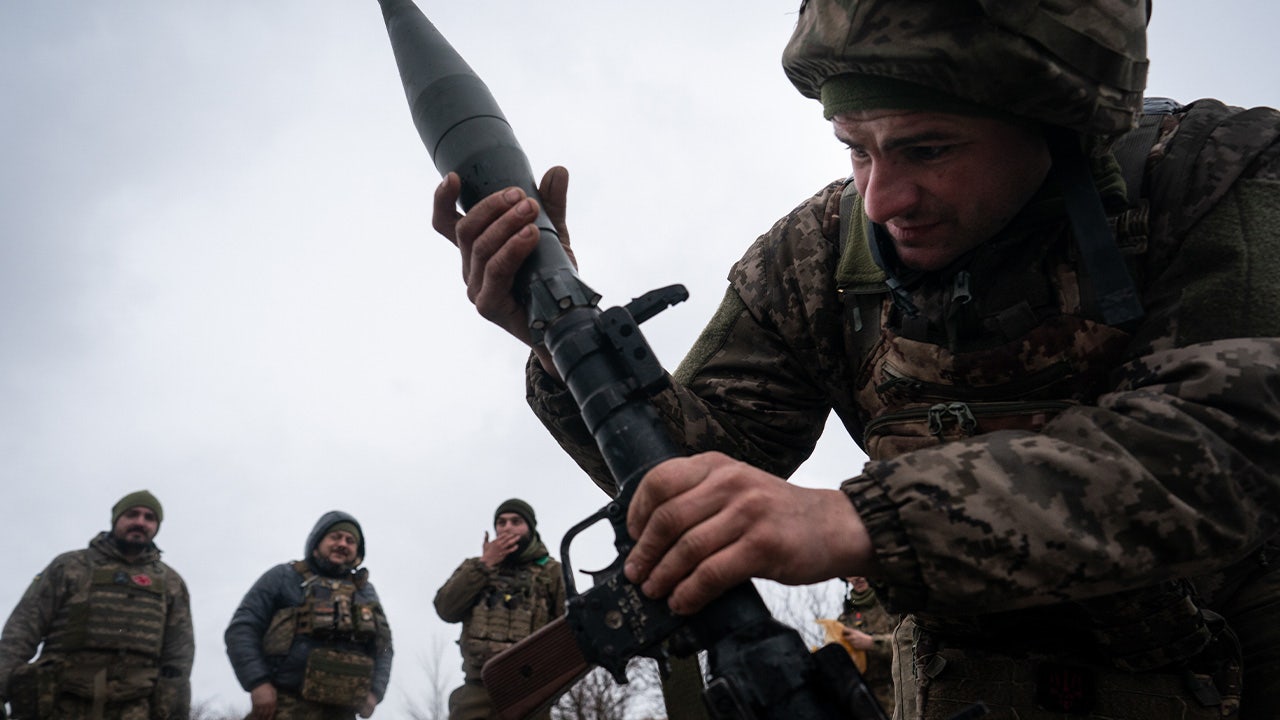
The third year of war in Ukraine as the new year approaches has seen new battle lines established after Russia made advances in the east and Kyiv opened a new battlefront in Russia. The war, which has cost $278 billion in aid for Ukraine, including nearly $87 billion from Washington, expanded to Asia in 2024 as geopolitical rivalries in the Indo-Pacific played out through proxy in Ukraine. The U.S. Congress had a heated fight over military aid to Ukraine, highlighting divisions in the Republican Party and Kyiv’s reliance on Washington’s support. The debate ended in April and had implications for Ukraine’s defense against Moscow’s missile and Russian offenses. The Biden administration’s strike bans on U.S.-supplied long-range missiles were eventually lifted in November.
In late April, the House passed a $61 billion military aid package for Ukraine, pushing U.S. financial commitments to $183 billion since Russia’s invasion in 2022. The European Union began membership talks with Ukraine in June after meeting necessary requirements. At the July NATO Summit, pressure was placed on the Biden administration to lift strike restrictions enforced on Ukraine. In September, Moscow sought to secure its defense budget for 2025. The G-7 finalized a $50 billion loan to Ukraine paid using frozen Russian assets, and in October, Ukraine received $1 billion from the U.S. President Biden has vowed to fast-track military assistance to Ukraine until the end of his term.
Throughout 2024, Russia escalated its aerial attacks targeting towns and cities, particularly in eastern Ukraine, ahead of infantry advances. November saw a high number of battlefield losses for Russia, with over 45,00 casualties reported. Russia twice set records for the greatest number of drone strikes against Ukraine in a single campaign. In May, Russia launched a new front in Kharkiv, but Kyiv’s counteroffensive largely failed. In August, Ukraine launched a ground incursion into Russia’s Kursk region, diverting forces from eastern Ukraine. North Korea deployed troops to Russia, the first foreign nation to send troops since the war began.
North Korea’s involvement in Russia’s war has highlighted divisions in the Indo-Pacific and threatened by countries like South Korea and Japan. Japan sent $3 billion in frozen Russian assets to Ukraine on Christmas Day. Russia attacked Ukraine’s energy infrastructure by firing drones and missiles, causing mass blackouts. Former President Trump, who promised to end the war before taking office, is now working towards a peace deal between Putin and Zelenskyy. Zelenskyy suggested he would be open to a peace deal, but major stipulations such as Kyiv’s future in the NATO alliance may be obstacles to an agreement. Russian Foreign Minister Sergey Lavrov dismissed calls for a ceasefire.
In conclusion, the war in Ukraine has seen escalations throughout 2024 with new battlefronts opening and increased military aid from the U.S. and other allies. The conflict has widened to involve countries outside of Europe, and divisions in the Indo-Pacific have been highlighted. President Trump has shifted his stance on ending the war and is now working towards a peace deal, although significant challenges remain. The toll of the war on both Ukraine and Russia has been significant in terms of casualties, financial costs, and loss of territory. The international community continues to monitor the situation closely and seeks ways to support Ukraine and bring an end to the conflict.