




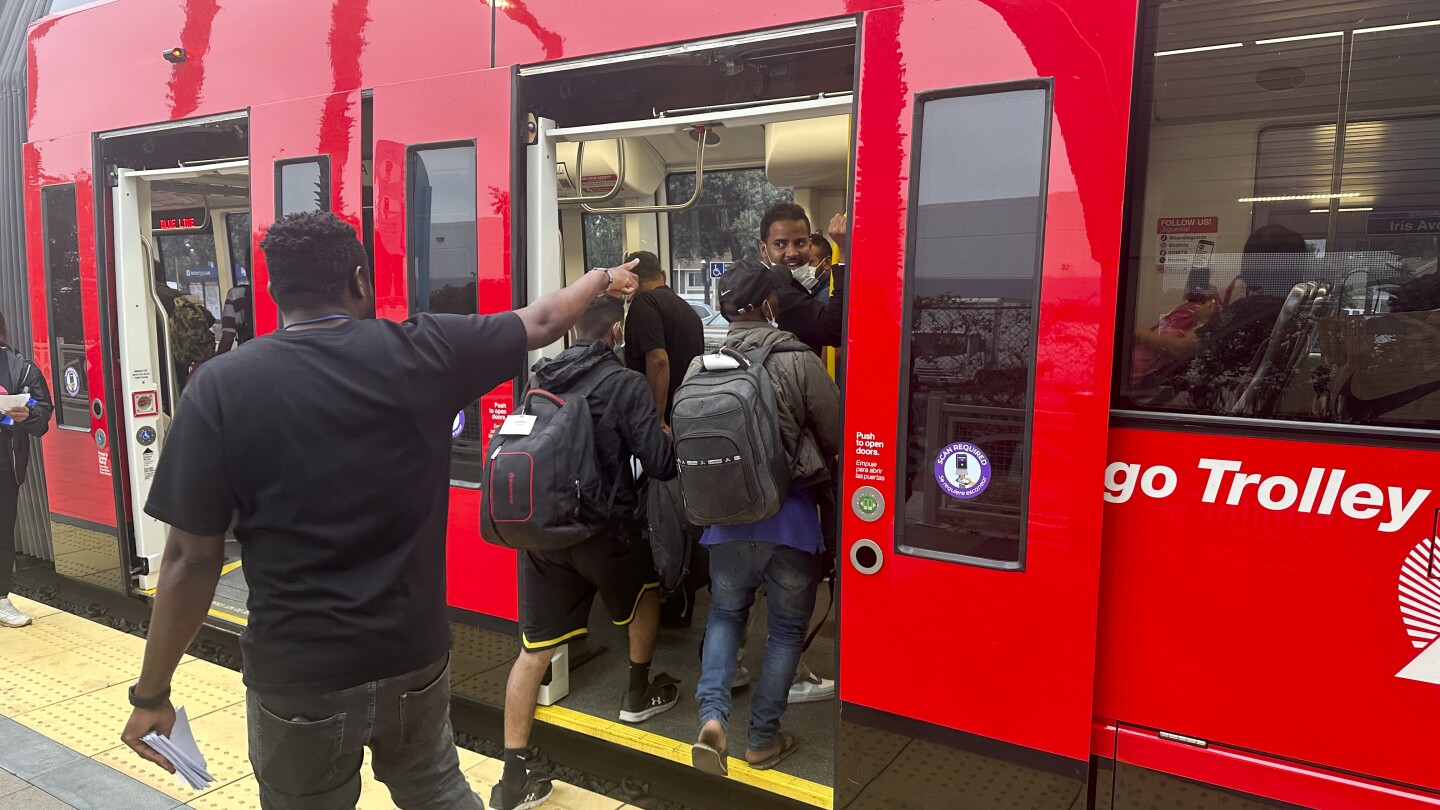
The Biden administration’s suspension of asylum processing at the U.S. border with Mexico has resulted in logistical challenges for deportation flights. Gerardo Henao, a Colombian jewelry business owner fleeing extortion attempts, was released by Border Patrol agents at a San Diego bus stop due to a scarcity of deportation flights to Colombia. The policy, which came into effect this week, allows for exceptions based on operational considerations, recognizing the limitations in resources and authority to deport everyone subject to the measure, particularly those from countries in South America, Asia, Africa, and Europe who have recently arrived at the border.
Despite the challenges, thousands of migrants have been deported under the ban, including individuals from Colombia, Ecuador, El Salvador, Guatemala, Peru, and Mexico. Some migrants, like Henao, have been released with orders to appear in immigration court at a later date. Border officials are prioritizing detaining migrants who can be easily deported, followed by those from nationalities that require more time to issue travel documents, and finally, those from nationalities whose governments do not accept U.S. flights.
The instructions for enforcement of the policy have been outlined in a memo to agents, with the goal of reducing arrests for illegal crossings to below 1,500 a day. However, challenges arise in deporting individuals to countries that are uncooperative or have limited capacity to accept deportees. U.S. Immigration and Customs Enforcement conducted 679 deportation flights from January to May, with the majority going to Guatemala and Honduras. Only a small number of flights were directed towards countries in South America, Africa, and Asia, despite significant migration flows from these regions.
Some countries refuse to accept deportation flights to avoid being overwhelmed themselves, leading to complications in the removal process. The Biden administration faces constraints in detention and removal of individuals due to logistical, diplomatic, and resource limitations. Mexico remains the easiest country for removals, but the distribution of border arrests has shifted over the years, with Mexicans accounting for a smaller percentage of arrests compared to previous years. The challenges in deportation efforts highlight the complexities of immigration enforcement and the need for cooperation between governments to facilitate the return of individuals to their home countries.
Despite the difficulties, the Biden administration continues to enforce its asylum processing suspension, with a focus on reducing illegal crossings and detaining migrants for potential deportation. The situation at the U.S.-Mexico border remains fluid, with ongoing efforts to address the influx of migrants from various countries. As the administration navigates the challenges of deportation logistics and cooperation with foreign governments, the fate of individuals like Henao hangs in the balance, awaiting resolution in immigration court and potential deportation back to their home countries.