




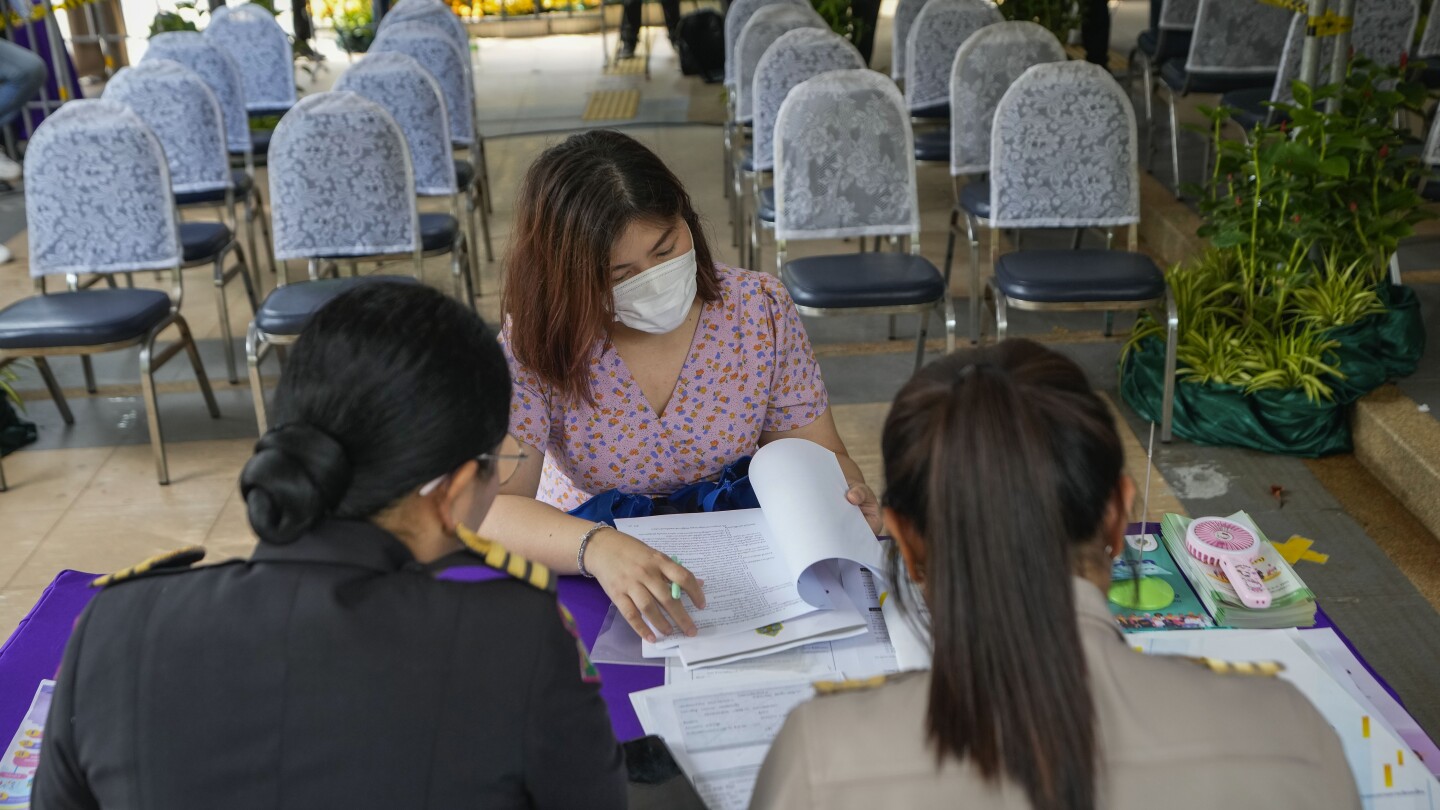
Thailand has officially begun the selection process for new senators, with candidates registering to compete for one of the 200 seats in Parliament’s upper house. The power of the Senate was demonstrated when it blocked a progressive party from forming a new government due to the 2017 Constitution, which requires the prime minister to be approved by a joint vote of the elected House and Senate. The Move Forward Party faced opposition from senators who disagreed with its vow to seek reforms of Thailand’s monarchy. The selection process will include three rounds of voting: district, provincial, and national, with the final results expected in July. Critics argue that the complex selection process and Constitution were designed to discourage public participation and allow the state bureaucracy to hold more power than elected officials.
Unlike lower house legislators who are elected, senators will be chosen by their fellow applicants based on 20 categories such as occupation or social position, including women, the elderly, and the disabled. The new senators will no longer be able to participate in selecting a prime minister but will retain the power to approve legislation passed by the House. They will also have the authority to select members of nominally independent regulatory bodies such as the Election Commission and the Constitutional Court, which have been criticized for impeding political reform efforts. The Senate’s votes are required to amend the Constitution, and the governing Pheu Thai party is pushing for a new charter to facilitate promised reform efforts. Civil society groups are campaigning to raise awareness and encourage those in favor of democratic reforms to participate in the Senate selection process.
Law reform advocate Yingcheep Atchanont of the group iLaw has been organizing discussions and workshops to help potential applicants understand the selection process. Candidates must be over 40 years old and have more than 10 years of experience in their chosen occupational group, although this requirement does not apply to those competing in social identity groups. They are prohibited from campaigning or engaging in any activities that could be interpreted as campaigning. The Election Commission has acknowledged the complexity of the process but is confident it can be carried out smoothly and transparently. Political science lecturer Purawich Watanasukh believes the rules were intentionally designed to reduce public participation and views the selection process as an opportunity for the progressive movement to challenge the establishment and potentially reshape Thailand’s political landscape.
The selection of new senators in Thailand has become a battleground between progressive forces advocating for democratic reforms and conservatives seeking to maintain the status quo. The Senate’s role, albeit limited compared to the House of Representatives, has significant implications as demonstrated by its ability to block a party from forming a new government. The complex selection process and Constitution have been criticized for hindering public participation and allowing unelected officials to hold significant power. Critics argue that the Senate’s influence in selecting key officials and amending the Constitution can impede progress in political reform efforts. As the selection process unfolds, civil society groups are working to raise awareness and encourage individuals who support democratic reforms to participate. Despite the challenges and criticisms, advocates like Yingcheep Atchanont are actively engaging with potential applicants to promote understanding of the process and emphasize the importance of Senate selection in advancing reform agendas. Ultimately, the selection of new senators in Thailand represents a critical juncture in the ongoing struggle between progressive movements and the establishment, with far-reaching implications for the country’s political future.