





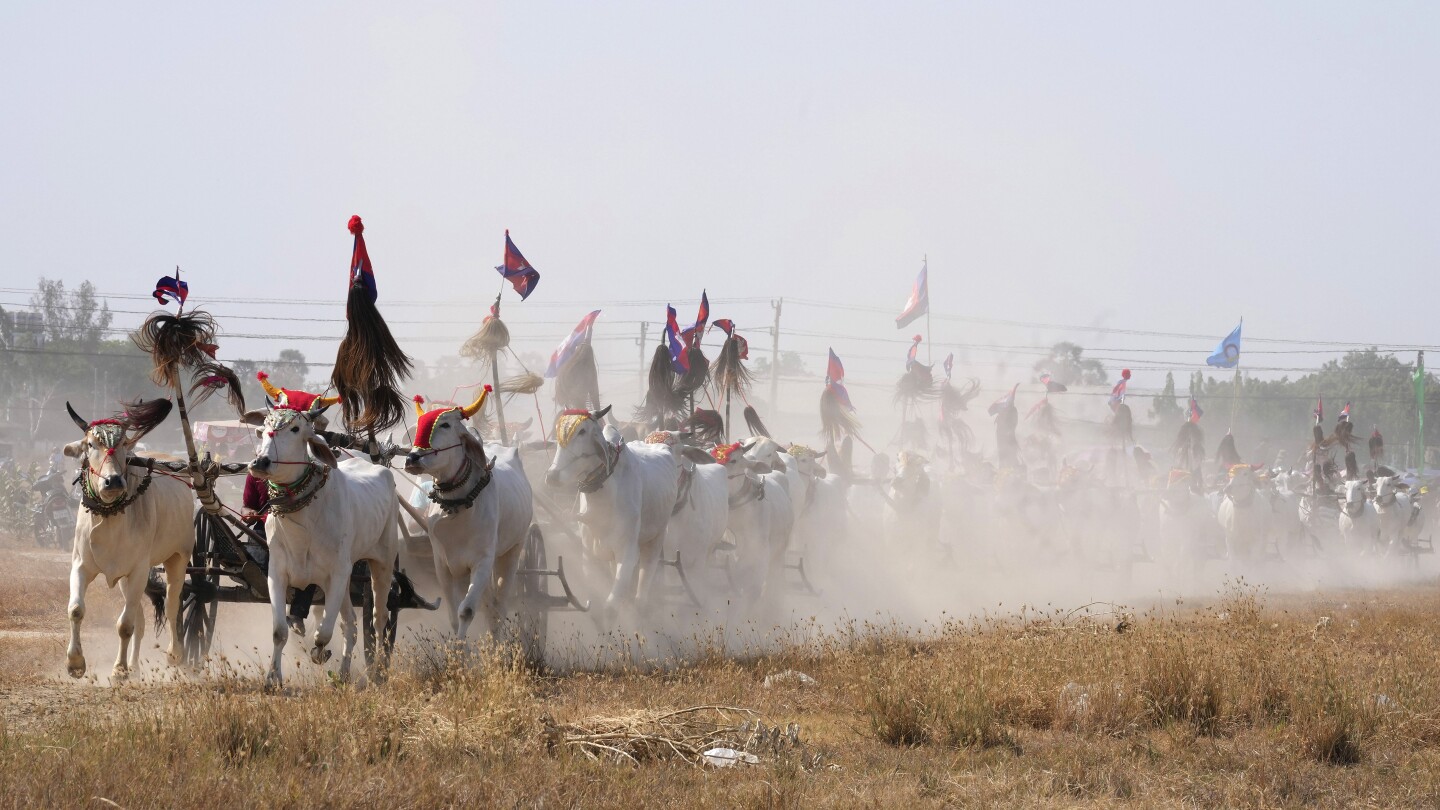
The villagers of Romduol Village in Cambodia gathered for a rare oxcart race to celebrate the Khmer Lunar New Year and the end of the rice harvest. The race, held on a 1-kilometer dirt track, attracted participants from four provinces who competed with their oxcarts pulled by two oxen. The oxcart has been a significant mode of transportation in Cambodia for centuries, especially in rural areas for farmers and the transportation of goods and people. However, the traditional oxcart is facing extinction as modern technology like tractors and motorized rickshaws replace it in everyday use.
For many participants and spectators, the oxcart race was a first-time experience, highlighting the importance of preserving Cambodia’s cultural heritage. Khem Rithy, a teacher from Kampong Speu provincial high school, brought 150 students to watch the race and learn about their country’s rich history and traditions. The event provided an opportunity for Cambodians to reconnect with their cultural roots and appreciate the significance of the oxcart in their history. The race showcased the deep-rooted traditions of the country and brought communities together to celebrate the new year and the harvest season.
The oxcart race in Romduol Village was a rare spectacle that brought joy and excitement to the participants and spectators alike. The sight of 50 pairs of oxcarts competing in the race from different provinces added to the festive atmosphere of the event. The cheers and enthusiasm of the spectators lining the route reflected the pride and appreciation for this traditional form of transportation. The race not only celebrated the Lunar New Year but also served as a reminder of the importance of preserving Cambodian cultural traditions for future generations to cherish.
The oxcart race was a symbolic gesture of preserving Cambodia’s cultural heritage and honoring the traditions of the past. As modern technology continues to replace traditional modes of transportation, events like the oxcart race become essential in keeping these traditions alive. The race served as a reminder of the role of the oxcart in Cambodian history and highlighted the need to protect and promote these cultural traditions. By participating in and supporting events like the oxcart race, Cambodians can ensure that their rich cultural heritage is passed down to future generations.
The oxcart race in Romduol Village was not just a competition but a celebration of Cambodian culture and traditions. The event brought together people from different provinces to commemorate the Lunar New Year and the end of the rice harvest in a unique and meaningful way. The race provided an opportunity for villagers to showcase their skills and craftsmanship in handling oxcarts, while also fostering a sense of community and camaraderie among participants and spectators. The event was a reminder of the importance of preserving cultural traditions and celebrating the heritage that unites the people of Cambodia.
Overall, the oxcart race in Romduol Village was a cultural extravaganza that highlighted the significance of traditional practices in Cambodia. The event brought together villagers from different provinces to celebrate their shared history and heritage, while also showcasing the importance of preserving cultural traditions for future generations. The oxcart race served as a reminder of the role of the oxcart in Cambodia’s past and the need to protect and promote these traditions in the face of modernization. By reviving ancient practices like oxcart racing, Cambodians can ensure that their cultural identity remains intact and valued for years to come.