



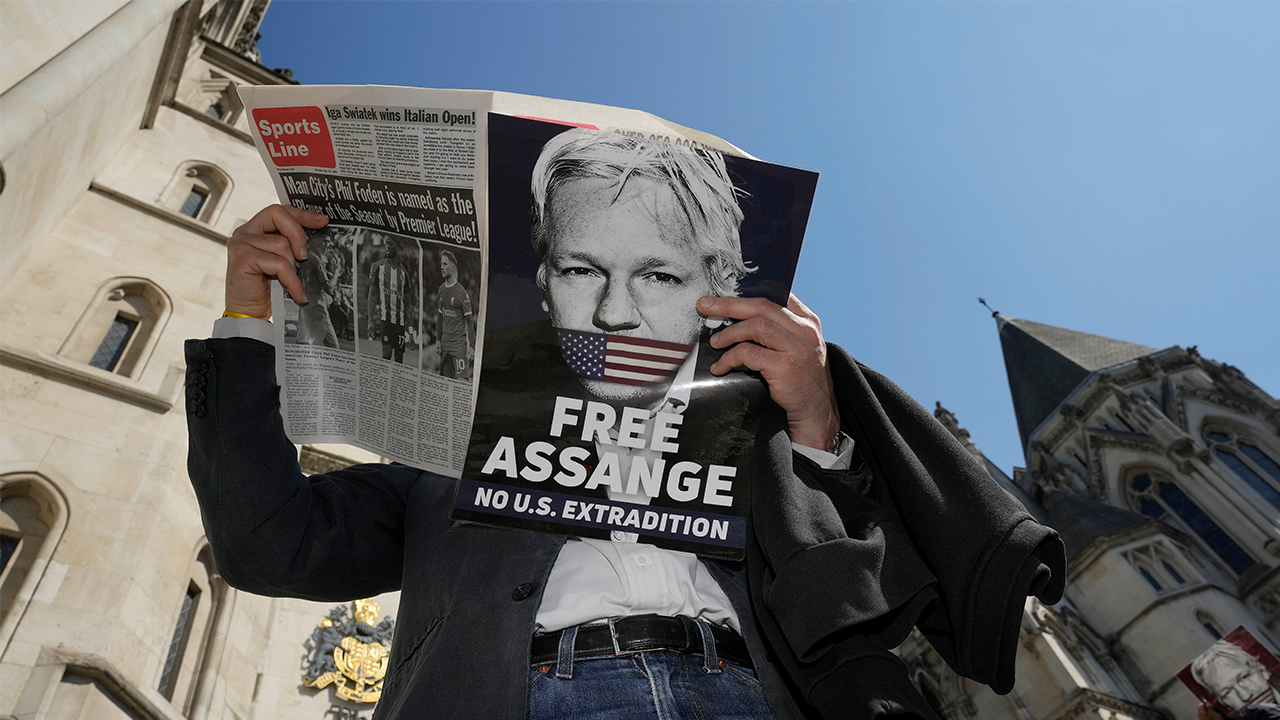
The British High Court ruled in favor of WikiLeaks founder Julian Assange, allowing him to appeal the extradition order to the U.S. on espionage charges. The court found the U.S. government’s assurances about free speech protections for Assange in a U.S. courtroom to be inadequate. Assange, 52, faces 17 counts under the Espionage Act for publishing classified U.S. military documents and could be imprisoned for up to 175 years if convicted. The charges were brought by the Trump administration’s Justice Department over WikiLeaks’ 2010 publication of cables leaked by Chelsea Manning, detailing alleged U.S. war crimes in Iraq, Afghanistan, and Guantánamo Bay, as well as CIA torture and rendition practices.
Assange’s family praised the ruling as a victory for freedom of speech and expressed relief at the decision, which allows Assange to make a full appeal before the British court. The U.S. has been pursuing Assange’s prosecution for years, and the Biden administration has continued the efforts. While the U.S. has provided assurances that Assange would not face additional charges leading to the death penalty and could raise a First Amendment defense, his lawyers argue that these assurances are insufficient. The court ruled that Assange could appeal on two grounds related to the First Amendment but accepted the U.S. assurances regarding the death penalty.
The judges highlighted concerns that if Assange is denied a First Amendment defense, his extradition could violate the European Convention on Human Rights, which protects free speech and media rights. Assange’s lawyers have raised multiple concerns about the case, including allegations of a political prosecution and a supposed CIA plot under the Trump administration to harm Assange. The Obama administration chose not to indict Assange in 2013, as it would have set a precedent for indicting journalists from major news outlets who also published the leaked materials. President Obama commuted Chelsea Manning’s sentence in 2017, and Manning was released later that year after being imprisoned since 2010.
The court’s decision has been lauded by press freedom groups, who see it as an important milestone in Assange’s legal case and a step towards preventing his extradition. The case has been closely watched by journalists and media organizations, as Assange’s prosecution is seen as an attack on journalism and press freedom. Reporters Without Borders Director of Campaigns, Rebecca Vincent, urged the U.K. to act in the interest of journalism and press freedom, emphasizing the importance of considering issues related to freedom of expression and the First Amendment in Assange’s case. The ruling opens up a new path for Assange’s legal defense and could potentially prevent his extradition to the U.S. where he faces serious charges and a lengthy prison sentence.