




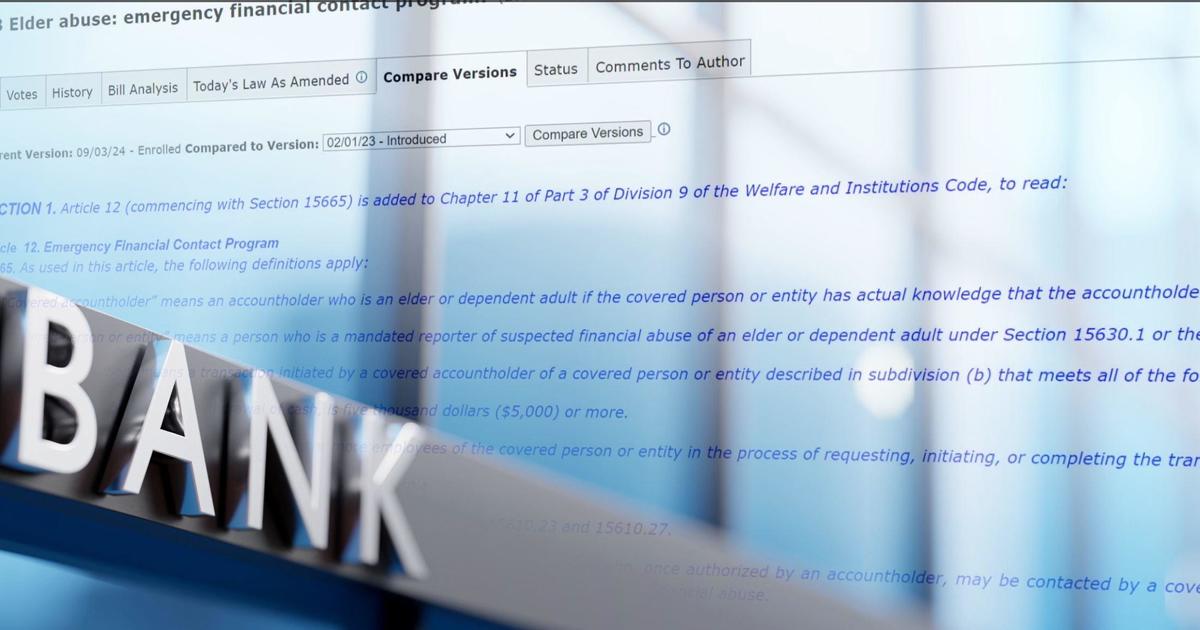
Credit card companies are held responsible for fraud loss under federal law, but there are no penalties for big banks when victims wire thousands of dollars to scammers. Alice Lynn, a Southern California widow caring for a disabled son, fell victim to a messaging app scam where she wired her life savings to a stranger in a cryptocurrency scam. The bank missed red flags and opportunities to stop her multiple transactions, leading to her losing $200,000. Senator Bill Dodd introduced Senate Bill 276 after hearing Alice’s story, requiring banks to create an emergency contact program for elderly account holders to prevent financial abuse and fraud.
The bill authorizes banks to delay transactions over $5000 for three business days if fraud is suspected and would require them to have an emergency contact to approve transfers in case of suspected elder fraud. The banking industry initially opposed the bill over concerns about liability and delaying transactions, but after major amendments limiting liability and delaying implementation until 2026, the bill passed with bipartisan support from both the Assembly and Senate. However, there may be challenges from federally chartered banks, like Chase, Bank of America, and Wells Fargo, as federal law protects them from certain state regulations.
Lobbyist and law professor Chris Micheli noted that federal banks may not be subject to California law, and Alice’s case against her bank under California law was moved to federal court. Despite this, Dodd’s bill could prompt a conversation at the federal level and among other states, potentially leading to a federal version of the law. The goal is to create lasting protections for elderly individuals like Alice, who are vulnerable to financial abuse and scams. The bill is currently awaiting the governor’s signature, with the potential to impact policy nationwide.
If passed and enacted, Dodd’s bill could change policy across the country, as it aims to protect seniors from financial abuse and fraud. The federal judge recently denied a motion by Alice’s bank to have her case dismissed, allowing her to pursue legal action in federal court. The bill’s potential impact and the ongoing legal proceedings in Alice’s case highlight the need for increased protections for vulnerable individuals, especially seniors who are often targets of financial scams. Dodd hopes that his bill will spark conversations at the federal level and encourage other states to create similar protections for their residents.