






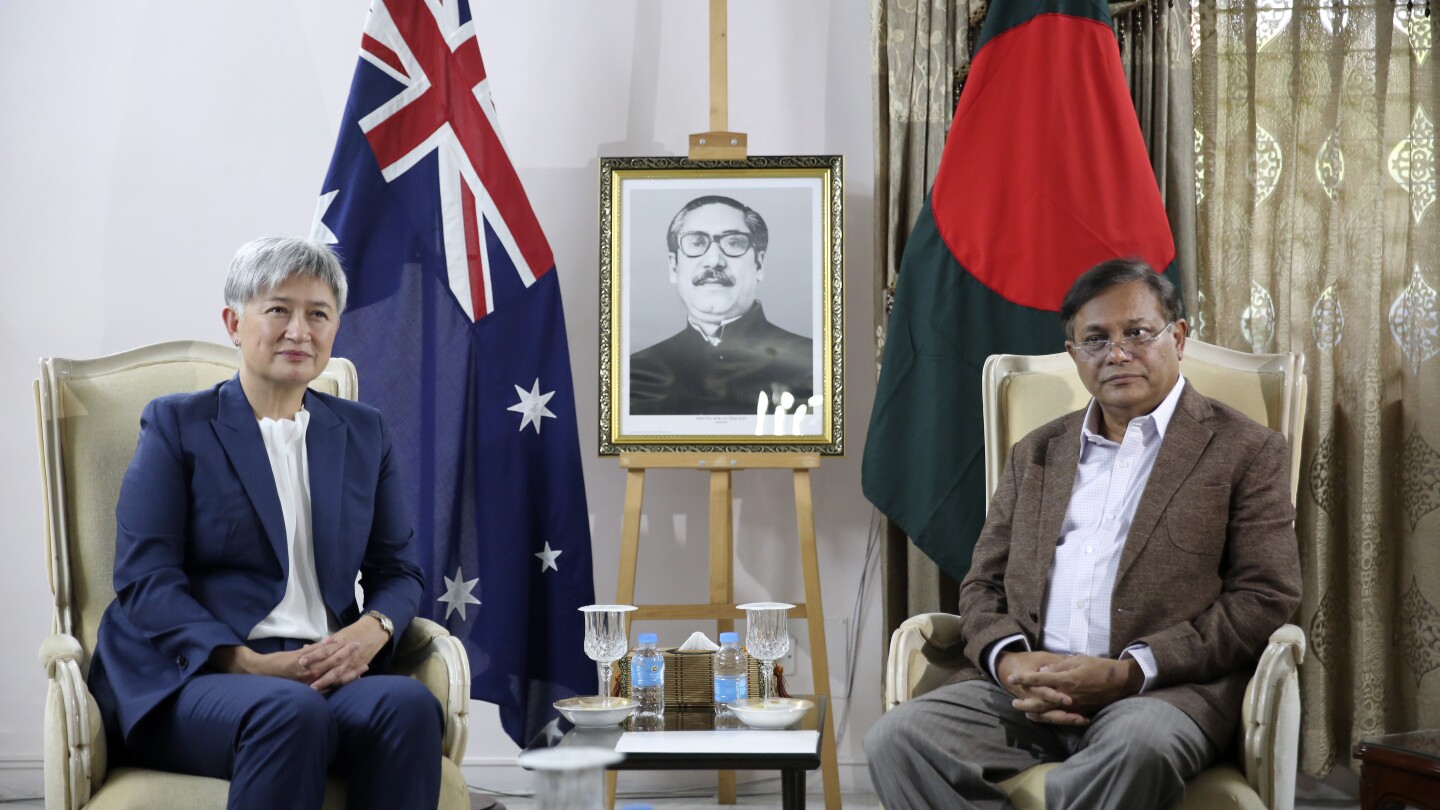
Australia and Bangladesh have reaffirmed their commitment to expanding trade and cooperation, particularly focusing on areas such as security and the Rohingya refugee crisis. Australian Foreign Minister Penny Wong visited Bangladesh to hold talks with Prime Minister Sheikh Hasina and Foreign Minister Hasan Mahmud. During the discussions, Wong expressed Australia’s eagerness to support Bangladesh as it transitions from least developed country status to developing in 2026. The visit aimed to enhance Australia’s engagement with the Indian Ocean region, emphasizing the importance of a peaceful and prosperous future for the shared region.
The trade relations between Bangladesh and Australia have been steadily growing, with two-way trade now exceeding $2.67 billion. This marks a significant increase from about $200 million a decade ago. The two countries signed a Trade and Investment Framework Arrangement in 2021, indicating a commitment to deepen their cooperation in various sectors. Foreign Minister Mahmud acknowledged the impressive growth in trade volume and highlighted the discussions on pressing issues like human trafficking during the visit. Australia commended Bangladesh’s generosity in hosting over 1 million Rohingya refugees who have been displaced from Myanmar.
Australia has pledged to continue supporting Bangladesh in addressing the Rohingya crisis by providing humanitarian assistance and advocating for accountability for the atrocities in Rakhine State. The Australian Foreign Ministry emphasized the need for a durable solution to the crisis, involving collaboration with Myanmar, Bangladesh, and other regional and international partners. As part of her visit, Minister Wong is scheduled to visit the Rohingya refugee camps in Cox’s Bazar district before traveling to Singapore. The ongoing humanitarian crises in Bangladesh and Myanmar were described as the largest and most complex in the region, underscoring the importance of international cooperation and support in addressing these challenges.
The visit by Australian Foreign Minister Penny Wong underscores the commitment of both countries to strengthening their partnership and addressing shared challenges. In addition to trade and cooperation, the discussions between the two nations also included areas such as climate change, regional maritime security, and people smuggling. Australia’s support for Bangladesh as it transitions to developing country status reflects a long-term commitment to promoting stability and prosperity in the region. The collaboration between Australia and Bangladesh serves as a model for constructive engagement and mutual assistance in addressing pressing issues affecting the region.
The signing of the Trade and Investment Framework Arrangement between Bangladesh and Australia and the significant increase in two-way trade demonstrate the tangible results of their partnership. Both countries have identified areas of common interest and continue to explore opportunities for collaboration in various sectors. The emphasis on addressing humanitarian crises, such as the Rohingya refugee crisis, highlights the shared commitment to promoting peace, stability, and security in the region. Australia’s recognition of Bangladesh’s efforts in hosting Rohingya refugees underscores the importance of international solidarity and support in responding to complex challenges.
As the visit concludes, Australia and Bangladesh are poised to further strengthen their ties and cooperation, building on the discussions and agreements reached during Minister Wong’s visit. The commitment to deepening trade and investment, addressing common challenges, and advocating for a durable solution to the Rohingya crisis showcases the shared values and objectives of both countries. The engagement between Australia and Bangladesh serves as a testament to the benefits of international cooperation in fostering peace, stability, and mutual prosperity in the region. The visit represents a milestone in the bilateral relationship between the two nations and sets the stage for continued collaboration on important regional and global issues.