




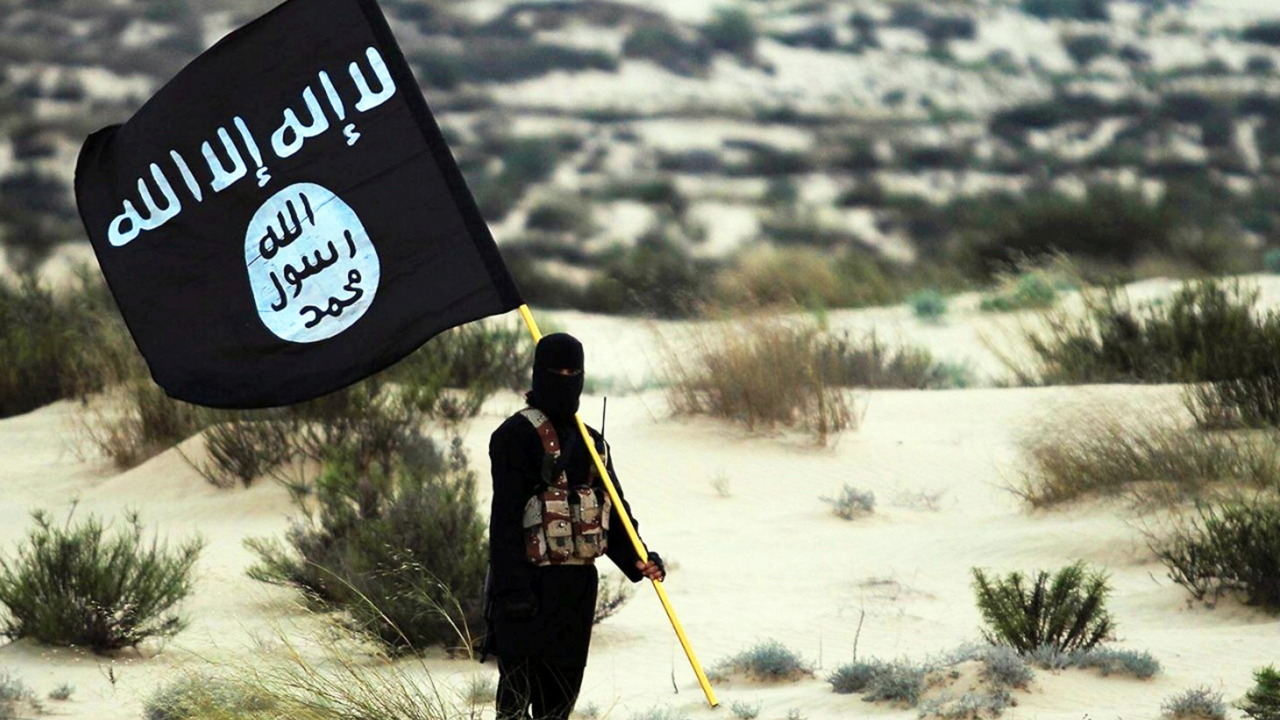
Syria’s U.S.-backed Kurdish-led force has handed over two Islamic State group militants to Baghdad suspected of involvement in mass killings of Iraqi soldiers in 2014, according to a report by the Syrian Observatory for Human Rights. The Iraqi National Intelligence Service also brought back three IS members from outside Iraq, although they did not provide further details. The Speicher massacre in 2014, where IS captured around 1,700 Iraqi soldiers after capturing Tikrit, sparked outrage across Iraq and led to the mobilization of Shiite militias in the fight against IS.
The Kurdish-led Syrian Democratic Forces, with the assistance of the U.S.-led coalition, captured 20 IS members in Raqqa, Syria, formerly the capital of the Islamic State group’s self-declared caliphate. Two of these members were handed over to Iraq, while it was unclear where the third suspect was brought from. Despite the defeat of IS in Iraq in 2017 and in Syria in March 2019, sleeper cells of the extremist group remain active and continue to carry out deadly attacks against SDF and Syrian government forces. In one recent incident, a suicide attacker attempted to storm a military checkpoint for the Deir el-Zour Military Council, killing three U.S.-backed fighters.
Over the years, Iraq has put on trial and executed dozens of IS members involved in the Speicher massacre. The SDF is currently holding over 10,000 captured IS fighters in various detention facilities, including 2,000 foreigners whose countries have refused to repatriate them. The detained fighters come from approximately 60 nationalities and were captured during battles in Syria. Kurdish authorities in northeastern Syria have expressed their intention to put these IS detainees on trial, although the timing of such trials is uncertain.
IS militants have claimed responsibility for a bombing in Afghanistan that killed a dozen police officers, demonstrating the ongoing threat posed by the extremist group despite their territorial losses in Iraq and Syria. The U.S.-backed Syrian Democratic Forces continue to face attacks from IS sleeper cells, highlighting the ongoing challenge of eradicating the group entirely. With the involvement of the U.S.-led coalition, efforts are being made to capture and hand over IS members suspected of past atrocities, such as the Speicher massacre in 2014, to face justice in Iraq. The presence of foreign fighters among the captured detainees adds complexity to the situation, as many countries have been reluctant to repatriate their citizens who joined IS.