



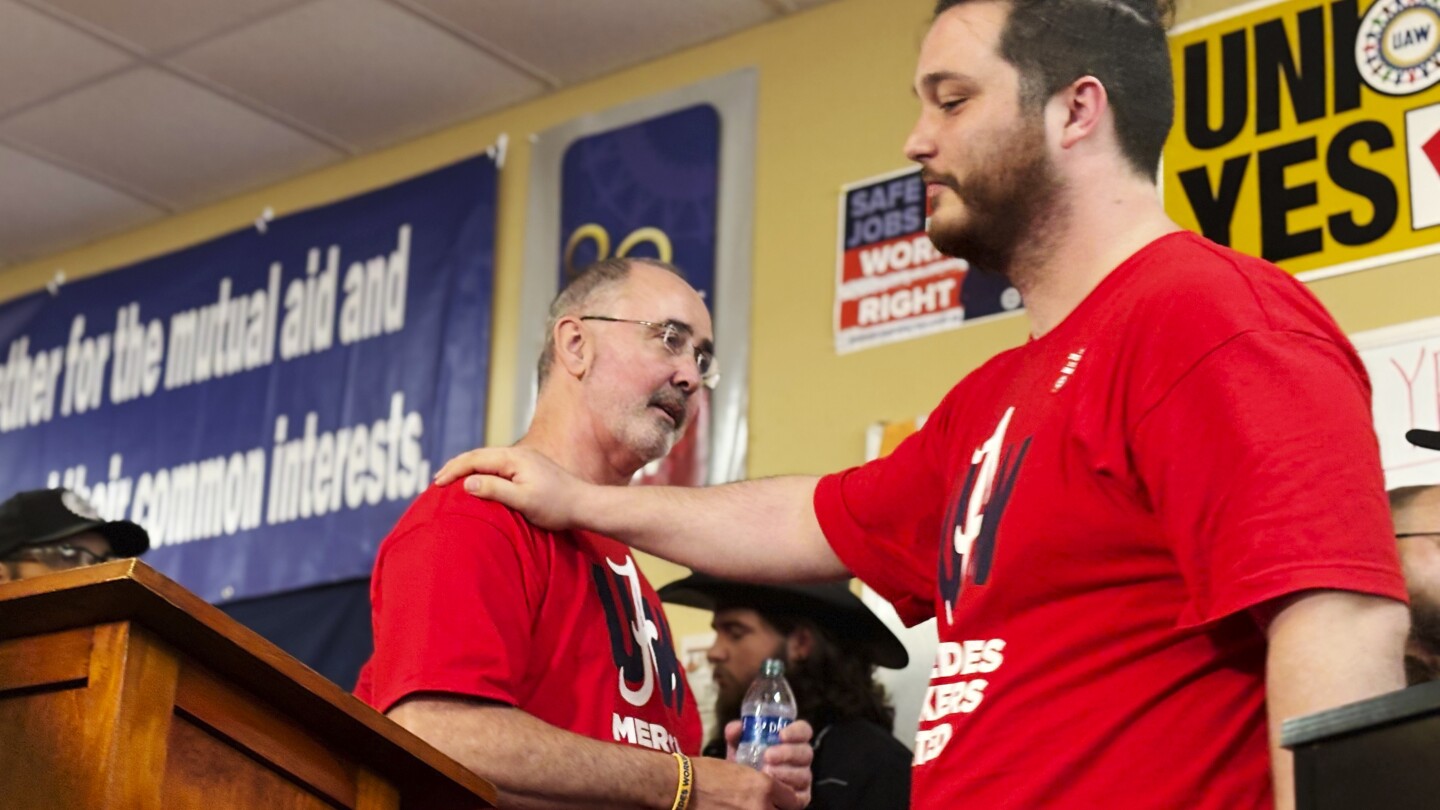
The United Auto Workers union faced a setback as employees at two Mercedes factories in Alabama voted against joining the union. The final tally showed a vote of 2,642 against the union and 2,045 in favor, with nearly 93% of eligible workers casting ballots. Despite the loss, newly elected President Shawn Fain vowed that the union will return and continue efforts to organize workers at nonunion plants across the nation. Marick Masters, a professor emeritus who studies the union, emphasized the need for the UAW to analyze what went wrong and apply those lessons in future organizing efforts.
Fain assured workers that the loss was a bump in the road, not a failure, and expressed confidence in the union’s ability to eventually succeed at Mercedes. The NLRB stated that both sides have five business days to file objections to the election, and the union must wait a year before seeking another vote at Mercedes. Fain accused the company of engaging in illegal behavior and indicated that the union has already filed unfair labor practice complaints against Mercedes. The company denied the allegations, stating its commitment to providing a safe and supportive work environment.
Alabama Governor Kay Ivey, who has spoken out against the union, emphasized the importance of the state’s auto manufacturing industry and urged the UAW to respect the results of the secret ballot election. Workers at the Mercedes plants had differing opinions on joining the union, with some citing concerns over unfulfilled promises and negotiable benefits, while others supported unionization for higher wages and better benefits. The UAW’s success at Volkswagen was attributed to the prospect of substantial raises and benefits in the contracts reached with Detroit Three automakers.
The UAW’s struggle to gain traction at nonunion auto plants in the South, where organized labor has less appeal, underscores the challenges the union faces in overcoming state incentives favoring nonunion workforces. A victory at the Mercedes plants would have been significant for the UAW, given the difficulty in organizing workers at nonunion factories in the South. The union’s determination to continue organizing efforts at other nonunion plants, despite the setback at Mercedes, highlights its commitment to expanding its presence in the auto industry. The union plans to regroup and learn from the experience in Alabama before moving forward with future organizing campaigns.