




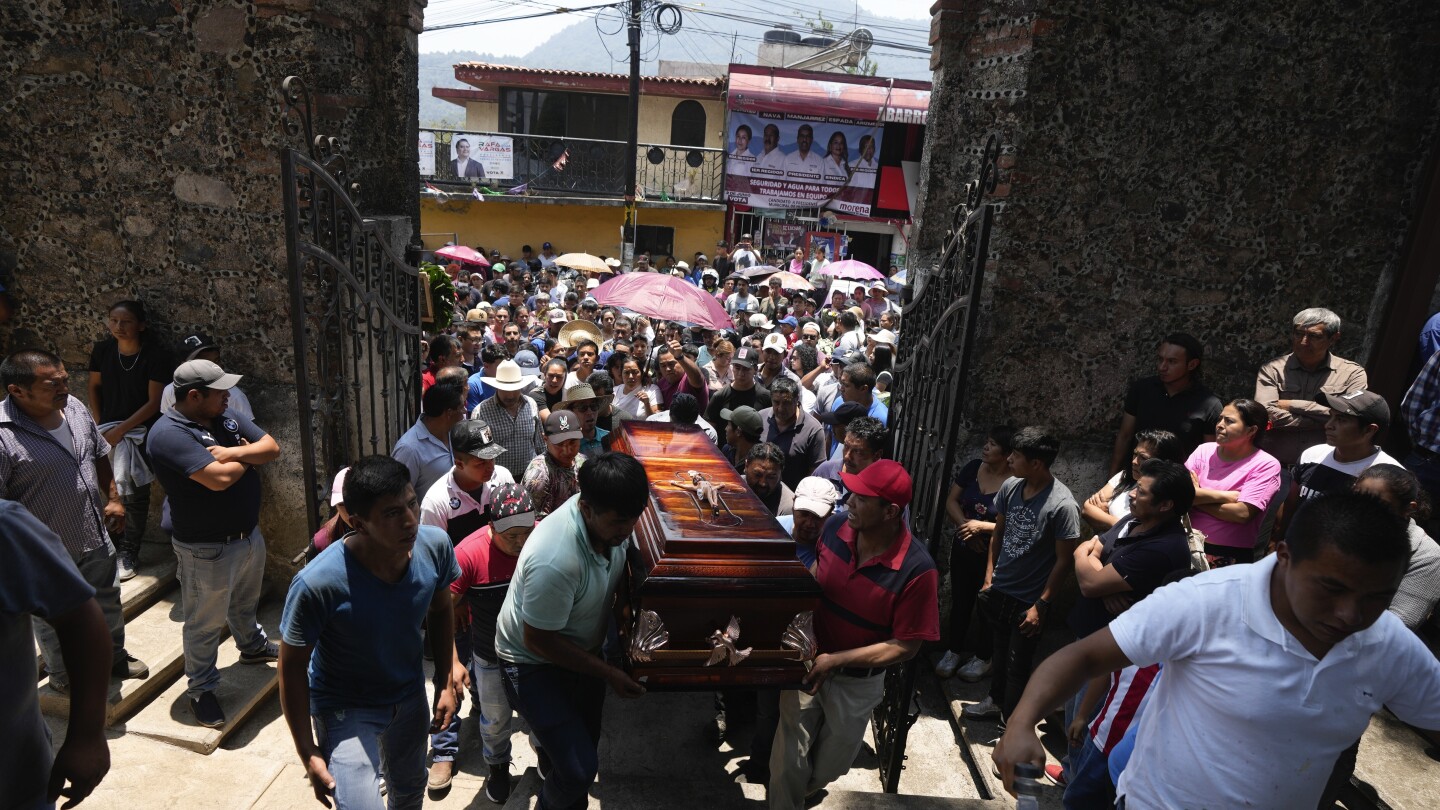
HUITZILAC, Mexico (AP) — The small Mexican town of Huitzilac is currently trapped in the middle of a violent feud between warring mafias, leading to fear among its residents. As Mexico prepares for the June 2 election, criminal groups are taking advantage of the opportunity to seize power and have been responsible for more than 100 politically-motivated killings, including about 20 candidates this year. The recent bloodshed in Huitzilac, which claimed the lives of eight men, has left the community in a state of terror, with neighbors afraid to venture outside and businesses shuttered.
The spike in violence ahead of the election is not a new phenomenon in Mexico, as cartel violence has been a longstanding issue in the country. Despite efforts by outgoing President Andrés Manuel López Obrador to stabilize the violence, the situation has not improved significantly. Authorities have struggled to confront cartel leaders and the criminal organizations continue to expand their control, not only through drug trafficking but also legal industries and migrant smuggling. The violence has escalated with the use of sophisticated tools like bomb-dropping drones and improvised explosive devices.
The situation in Huitzilac is reflective of the broader violence and instability plaguing Mexico. The town has been a focal point for cartel activity, making headlines for violent incidents in the past. Residents like Anahi, a mother of two, live in constant fear for their safety, with incidents of violence hitting close to home. The upcoming election has only intensified the fear and uncertainty in the community, with residents calling for remote classes for their children to avoid the danger of being caught in a shootout.
The violence in Mexico is not just limited to cartel warfare, but also includes politically-motivated attacks on candidates and voters. Over 100 people have been killed in politically-motivated killings this year, with many more facing threats and attacks. The elections have become a high-stakes game for criminal groups seeking to gain power and assert control over territories. The situation in Huitzilac is a stark reminder of the challenges facing the next president, as they inherit a complex puzzle of criminal organizations and escalating violence.
The Mexican government’s response to the escalating violence has been criticized for being ineffective in curbing the power of the cartels. Despite efforts to address the social factors driving cartel recruitment, the violence continues to escalate. The next president will have to dismantle these criminal organizations while facing a resilient and flexible enemy with multiple revenue streams. The disillusionment among voters like Anahi, who had hoped for a change under López Obrador, reflects a broader sense of disappointment with the government’s handling of the violence and insecurity plaguing their communities.
As the residents of Huitzilac mourn the lives lost in the recent violence, they are faced with the harsh reality of living under the chokehold of criminal mafias. The upcoming election will determine the next leader who will have to navigate the complex landscape of cartel violence and political instability. The fear and uncertainty gripping Huitzilac serve as a microcosm of the broader challenges facing Mexico, as the country grapples with the intertwined issues of cartel warfare, political violence, and the struggle for control over territory.