





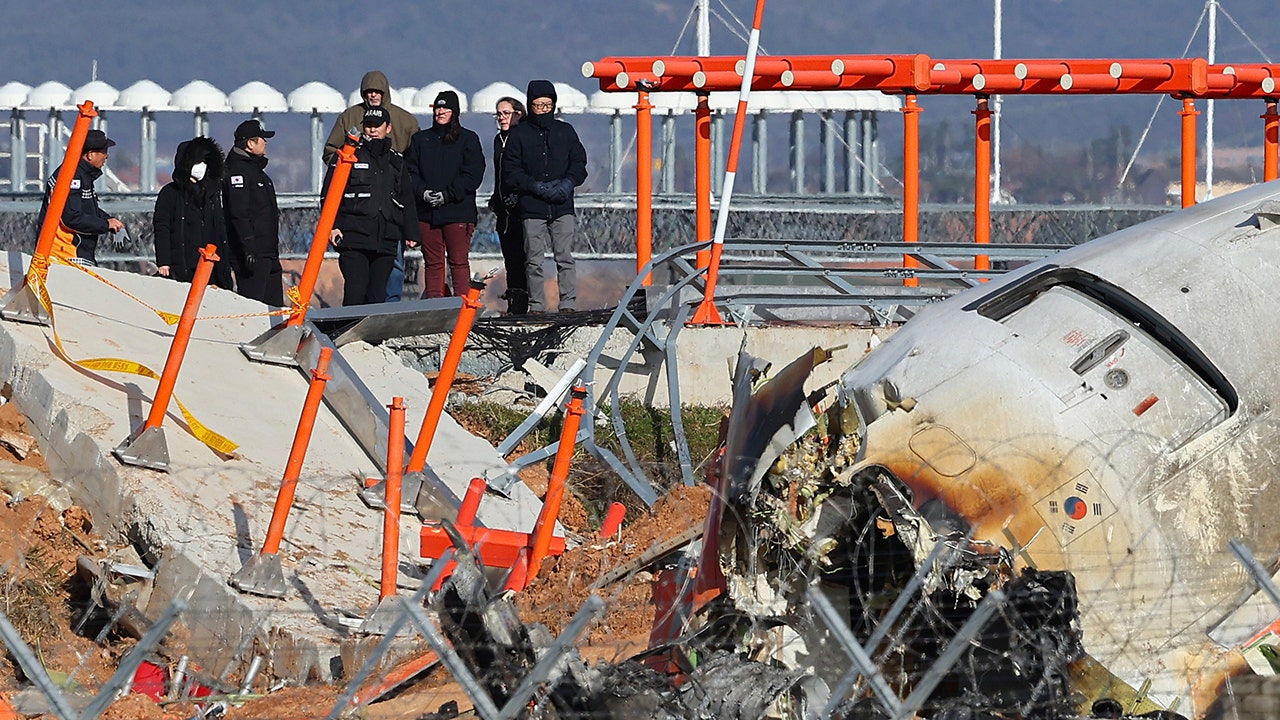
A tragic plane crash involving a Jeju Air Boeing 737-800 in South Korea resulted in the death of all but two of the 181 occupants on board. This incident stands as South Korea’s deadliest plane crash in years. U.S. investigators, along with representatives from the aircraft manufacturer, are currently at the crash site to gather evidence that will shed light on why the pilot decided to attempt a landing after declaring an emergency. The airline confirmed that a pre-flight inspection reported no issues with the aircraft. Data from the plane’s flight recording devices, commonly referred to as black boxes, such as speed, altitude, fuel levels, and cockpit voice recordings will be thoroughly analyzed in the investigation.
Air safety experts are questioning the positioning of an airport embankment into which the plane crashed after skidding past the end of the runway. Video footage shows the plane colliding with the embankment, triggering an explosion. An updated section of the airport’s operating manual from early 2024 mentioned that the embankment was too close to the runway’s end and recommended a reevaluation of equipment positioning during an expansion. This development raises concerns about potential safety hazards in the airport’s infrastructure.
In response to the tragedy, the South Korean government has initiated safety inspections on all 101 Boeing 737-800 aircraft in the country. The Transport Ministry disclosed that a team of U.S. investigators, including representatives from the Federal Aviation Administration, National Transportation Safety Board, and Boeing, visited the crash site to conduct an examination. The investigation aims to scrutinize maintenance and operation records during a five-day safety check period. Although it may take several months to determine the exact cause of the crash, officials are exploring various scenarios, including the possibility of a bird strike affecting the aircraft during its final approach.
Amid the ongoing investigation, experts are considering multiple factors that could have contributed to the tragic accident. Aviation consultant Mike Boyd highlighted concerns about the plane’s high-speed landing on the 9,200-foot runway, raising questions about the reasons behind the aircraft’s elevated approach. While a bird strike is being examined as a potential factor, investigators are also focusing on the overall sequence of events that led to the fatal crash. With the skilled expertise of the U.S. investigative team and collaboration with local authorities, detailed analyses are expected to uncover vital insights into the circumstances surrounding the incident.
The critical examination of flight data, cockpit recordings, and physical evidence from the crash site is essential to piecing together the chain of events that culminated in the tragic accident. As officials work tirelessly to determine the root cause of the crash, the aviation industry is closely watching the investigation’s progress to implement necessary safety measures and prevent similar incidents in the future. The collaboration between U.S. and South Korean authorities reflects a commitment to aviation safety and transparency in addressing potential risks within operational procedures and infrastructure.
With safety inspections ongoing and expert investigations in progress, the aftermath of the Jeju Air plane crash underscores the importance of thorough evaluation and continuous improvement in aviation safety protocols. The tragic loss of lives in this incident serves as a somber reminder of the inherent risks associated with air travel, highlighting the critical need for stringent safety measures and meticulous oversight to prevent such catastrophic events. As details emerge from the investigation, the aviation industry will undoubtedly draw valuable lessons from this tragedy to enhance safety standards and ensure the well-being of passengers and crew members on every flight.