



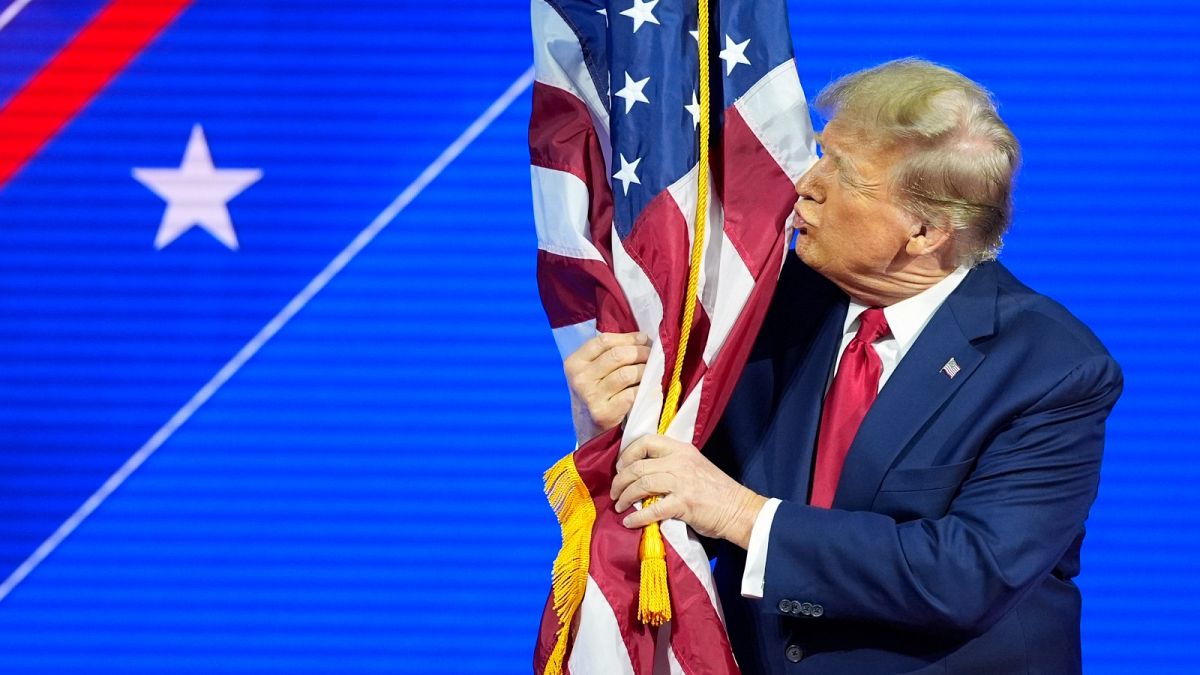
Donald Trump’s political comeback in the United States has been met with mixed reactions in Europe, with some populist politicians celebrating his victory while experts warn of potential negative impacts on the continent’s security, defense, and economic interests. Hungarian Prime Minister Viktor Orbán and Italy’s deputy prime minister Matteo Salvini have both welcomed Trump’s win, claiming it will bring positive changes to Europe. However, experts caution that Trump’s “America First” agenda may prioritize US interests over those of European countries, leaving them at a disadvantage.
Orbán has been hailed as Trump’s main contact in Europe, and his relationship with the US Republican party could raise his profile diplomatically. However, economically, Hungary may suffer if Trump implements higher tariffs on German imports, potentially hurting the Hungarian economy. Salvini also sees Trump’s presidency as beneficial for Italy and Europe, as they share views on migration and traditional values. Both leaders have been criticized for their polarizing methods of governance and attacks on political opponents, which may be validated by Trump’s presidency.
However, experts caution that Trump’s policies are likely to have a negative impact on Europe, especially in areas such as businesses, defense, and security. France and Germany, key powers in European security and defense, may face challenges as a result of Trump’s presidency. Trump’s “America First” agenda prioritizes US interests, potentially causing harm to Europe through higher tariffs and instability in the region. Leaders such as Macron have emphasized the importance of defending European interests and preparing for potential shifts in US support for Ukraine and NATO.
There is concern that Trump may attempt to play EU member states against each other and exploit divisions for his benefit. Some European leaders may be inclined to buy weapons from the United States or make favorable agreements with the Trump administration, potentially further fragmenting the EU. The European Commission will have a crucial role in preventing this and ensuring unity among member states. While Trump’s win may temporarily boost the popularity of the populist right in Europe, the long-term evolution of the relationship with Europe remains uncertain, with potential challenges and consequences for the continent.
Overall, Trump’s victory in the US presidential election has implications for Europe’s political landscape, economy, and security. While some leaders see potential benefits in closer ties with the Trump administration, others are concerned about the impact of Trump’s “America First” policies on European interests. The future of US support for Ukraine and NATO will be closely watched, as Trump’s rhetoric and actions could have far-reaching effects on transatlantic relations and European unity. European leaders will need to navigate these challenges and work together to protect their interests in the face of a shifting political landscape.