



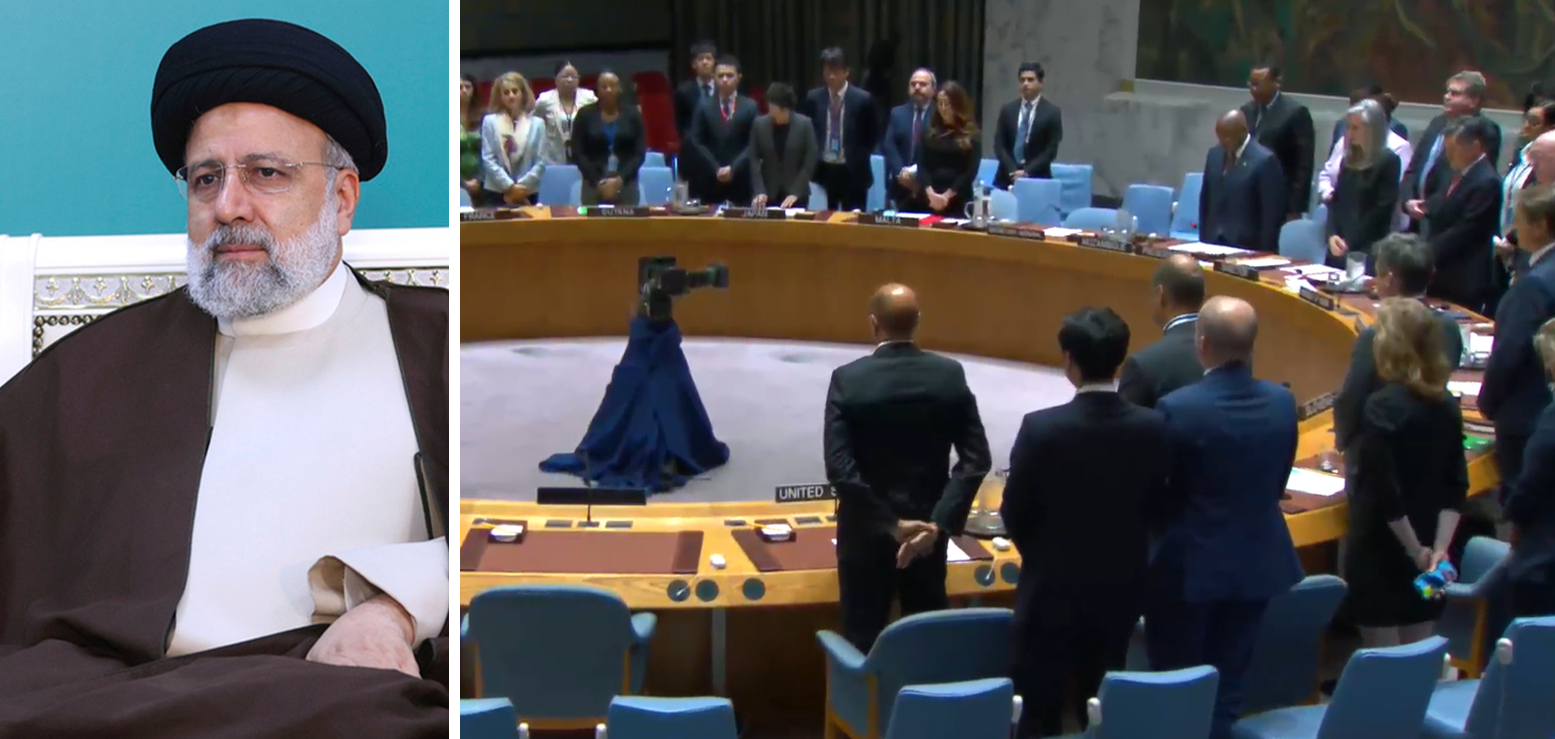
The United Nations held a moment of silence for Iranian President Ebrahim Raisi after he died in a helicopter crash, despite his reputation as the “Butcher of Tehran” due to human rights abuses. Israeli U.N. Ambassador Gilad Erdan criticized the move, calling it a “disgrace.” The U.S. State Department acknowledged Raisi’s brutal record but stated that they regretted his death. Experts criticized both the U.N. and the State Department for their handling of the situation, arguing that diplomatic niceties were being prioritized over acknowledging reality.
Raisi’s death has brought renewed attention to his human rights record, particularly his involvement in the “death commissions” of 1988 that executed thousands of political prisoners. Despite international condemnation, Raisi had defended his actions as necessary for maintaining security and order. Activists have raised concerns about escalating repression and violence under Raisi’s presidency, with mass protests in 2022 leading to hundreds of deaths and thousands of detentions. The Center for Human Rights in Iran warned that Raisi’s death does not mean an end to the regime’s oppressive tactics, as others could easily replace him and continue the same policies.
The moment of silence for Raisi at the U.N. Security Council prompted criticism from various quarters, with Israeli and American officials expressing dismay over honoring a man with a history of human rights abuses. The U.S. Ambassador to the U.N. clarified that participating in the moment of silence was a diplomatic norm and did not signify approval of Raisi’s actions. However, critics argued that the focus on diplomatic protocol was overshadowing the need to confront the reality of Raisi’s brutal legacy. There were calls for holding the Iranian regime accountable for its atrocities and promoting moral clarity in discussions at the U.N.
Raisi’s close ties to Iran’s supreme leader Ayatollah Ali Khamenei and his potential succession to a key position within the country’s regime raised concerns about the continuity of repressive policies. The crash that claimed Raisi’s life also resulted in the deaths of other officials, including the country’s foreign minister. Iranian state media reported that the helicopter carrying them crashed in a mountainous region, leading to an extensive search before their bodies were found. Raisi’s death marked the end of a chapter in Iran’s history but also served as a reminder of the deep-seated human rights abuses that have characterized the country’s leadership.
The international community’s response to Raisi’s death highlighted the continued challenge of addressing human rights violations within Iran and holding its leaders accountable. Despite condemnation from rights groups and activists, the regime has maintained a grip on power through repression and violence. The legacy of decisions made by figures like Raisi on “death commissions” endures, with lasting implications for the country’s political landscape. As the U.N. and other bodies navigate the complex issues surrounding Iran’s leadership, the need for a principled stance on human rights and justice remains paramount in shaping diplomatic relations and promoting global peace and stability.