




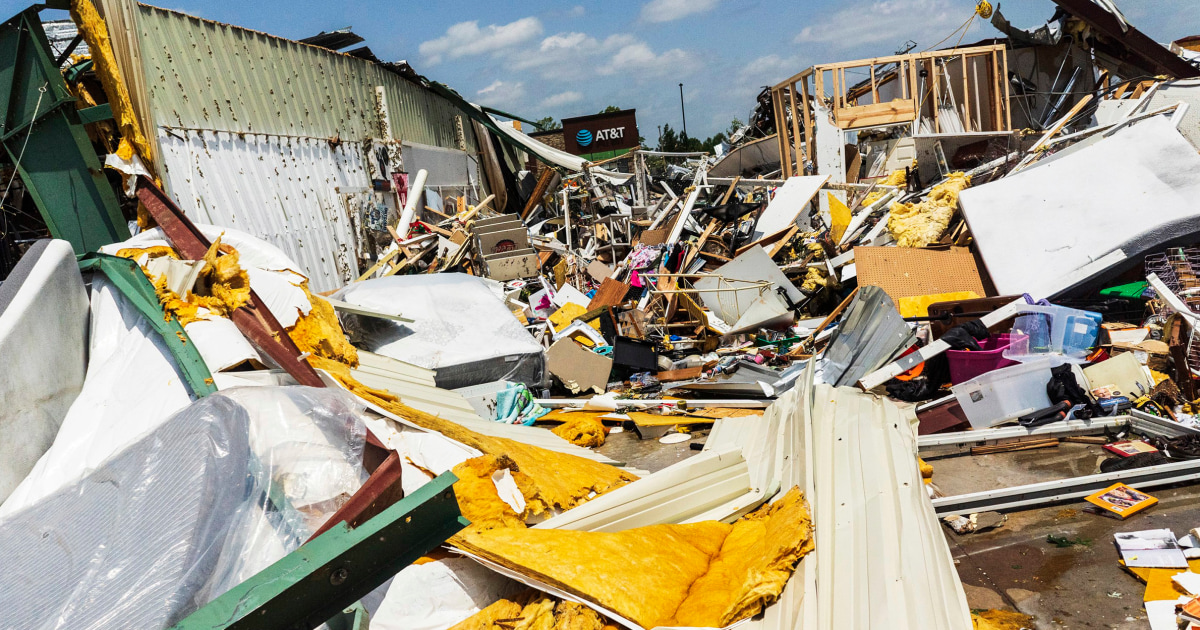
At least 68 million people were under severe weather warnings on Memorial Day as storms moved towards the Northeast after causing devastation in the central United States. At least 19 people had lost their lives, and half a million homes and businesses were left without power. Heavy storms were expected to move through Arkansas, Tennessee, and the Ohio Valley before continuing towards the East Coast, bringing heavy rain, strong winds, and large hail. Tornadoes were also possible in some areas, with flash flood alerts in place for 9 million people, primarily in Tennessee, Kentucky, and southern Indiana.
In Colorado, a rancher and 34 cattle were killed by lightning near the town of Rand, adding to the destruction caused by the severe weather. More than 460,000 homes and businesses were without power, with Kentucky being the hardest-hit state with over 182,000 outages. Some emergency phone lines were also damaged, causing further complications for residents. The severe weather incidents over the weekend had resulted in multiple fatalities in Arkansas, Texas, Oklahoma, and Kentucky, with weather-related incidents like falling trees causing the deaths. Tornadoes were confirmed across the region, with homes and vehicles in Valley View, Texas, being obliterated and funnel clouds and large hailstones reported in Missouri and Kentucky.
The National Weather Service planned to send teams to survey the damage across Kentucky, which had declared a state of emergency in several counties, along with parts of Arkansas. While a cold front was moving north, extreme heat warnings were in place for southern and central Texas, where temperatures were expected to exceed 100 degrees, possibly breaking daily records. The National Weather Service also warned of a heat index reaching up to 120 degrees in the state, posing a dangerous situation for residents. Similar hot weather was forecasted for Key West, Florida, and surrounding areas, adding to the already challenging weather conditions experienced across multiple states.
The severe weather warnings highlighted the importance of preparedness and safety measures for residents in the affected areas. As the storms continued to move across the country, the potential for further damage and disruption remained high. The devastation caused by the storms, including loss of life, property damage, and power outages, emphasized the need for vigilance and caution during extreme weather conditions. The efforts of emergency services, weather agencies, and local communities were crucial in responding to the challenges posed by the severe weather events and in ensuring the well-being of residents in the affected regions.
As the severe weather warnings continued to affect millions of people across the country, the impact of the storms on communities, businesses, and infrastructure became more apparent. The resilience and preparedness of individuals and organizations in dealing with the challenges posed by the extreme weather events were put to the test, prompting a coordinated response to mitigate the effects of the storms. The ongoing efforts to assess the damage, restore power, and provide assistance to those in need showcased the dedication and commitment of first responders, volunteers, and officials working tirelessly to address the aftermath of the severe weather incidents. By working together and supporting one another, communities could overcome the challenges brought by the storms and recover from the devastation caused by the severe weather warnings.